Seat comfort might not be the first thing that comes to mind when discussing clinical care but for millions of people worldwide, finding the right cushion is a daily medical necessity. Whether you are a hospital administrator evaluating seating solutions for post-operative patients, a caregiver supporting an elderly relative, or an individual managing a painful condition such as coccydynia, the difference between a medical gel cushion and a standard regular cushion is anything but trivial.
The market for therapeutic seating has grown substantially in recent years, driven by an ageing global population, rising rates of chronic pain conditions, and heightened awareness of pressure injury prevention in healthcare settings. Yet many consumers and even some healthcare professionals remain uncertain about what genuinely distinguishes a medical-grade gel cushion from the foam or fibre-filled cushions widely available in home ware stores.
This article cuts through the confusion. We examine the materials, clinical applications, and practical use cases for both categories, with specific attention to gel pads and gel cushions designed for medical use, the specialised role of the coccydynia cushion, and the often-overlooked connection between therapeutic seating and WC seat cover hygiene in healthcare environments.
Understanding Regular Cushions: What They Do Well (and Where They Fall Short)
A regular cushion found in homes, offices, and waiting rooms is typically constructed from one or more of the following materials:
- Polyurethane foam: The most common fill. Compresses under weight, offering basic comfort, but bottoms out over time and provides no active pressure redistribution.
- Polyester fibre (hollowfibre): Soft and lightweight, but loses its shape rapidly with repeated use and offers minimal clinical support.
- Memory foam: Conforms slowly to body shape and distributes weight more evenly than standard foam, making it a step up but it retains heat and lacks the responsiveness of gel-based materials.
- Cotton or wool filling: Natural, breathable fillings used in traditional cushions, offering comfort but essentially no therapeutic benefit for clinical conditions.
For healthy individuals without specific medical needs, a regular cushion performs its primary function adequately: adding a layer of comfort to a hard surface. The problem arises when regular cushions are used by people who genuinely need pressure redistribution, postural support, or infection-controlled seating populations for whom the limitations of standard materials become clinically significant.
Regular cushions also present a hygiene challenge in healthcare settings. Most are not designed with cleanable surfaces, making them inappropriate for use in clinical environments where cross-contamination and infection control standards apply.
What Is a Medical Gel Cushion? Materials and Mechanism
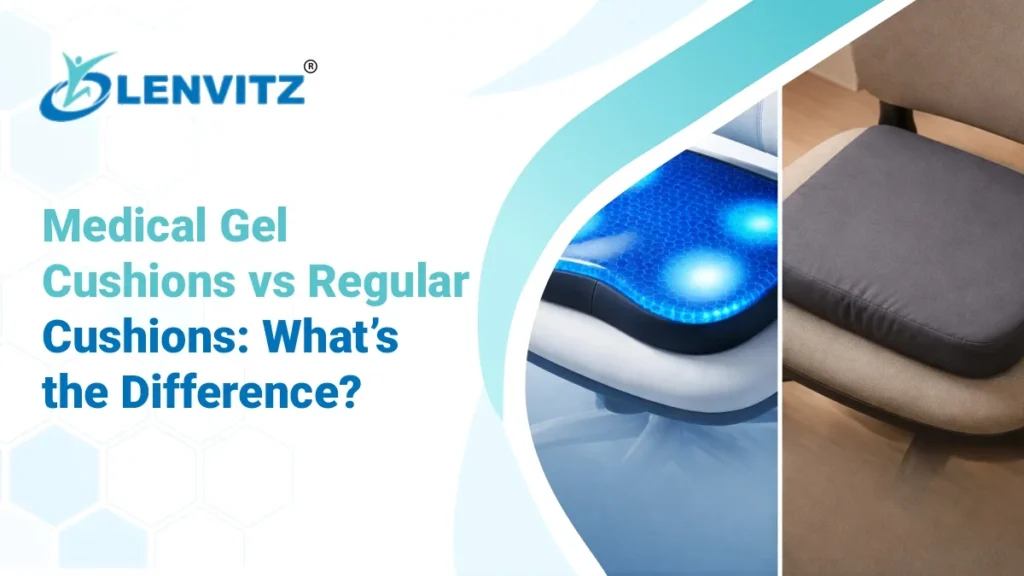
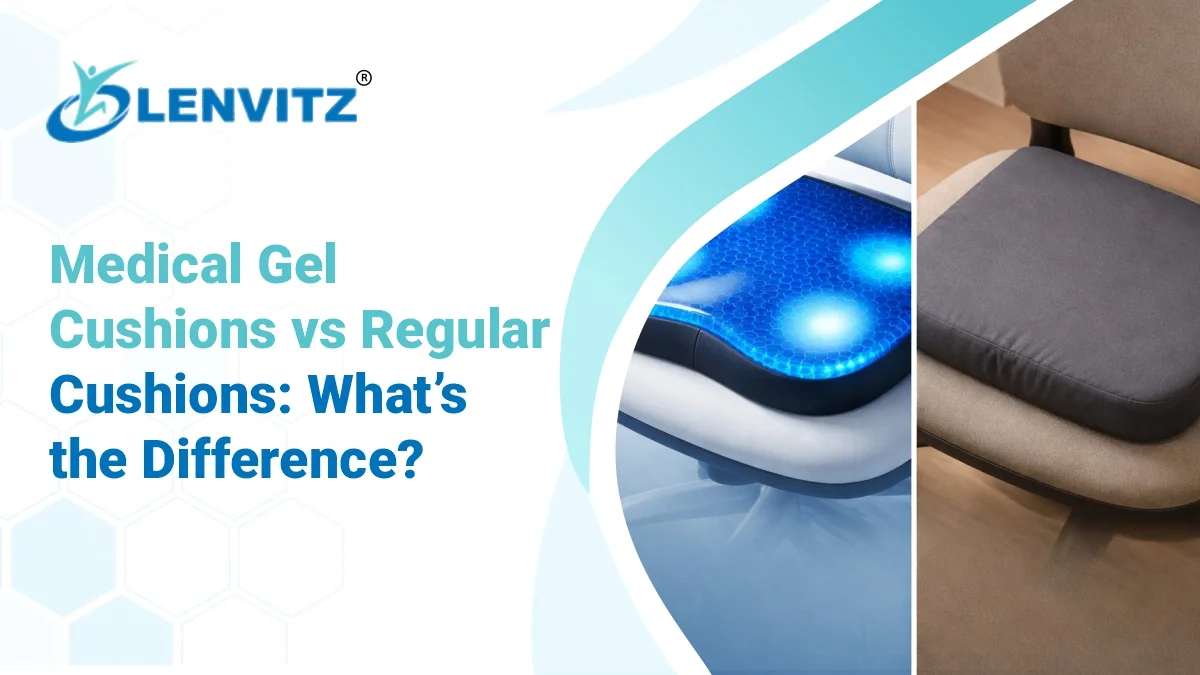
A medical gel cushion or gel pad is an engineered seating solution designed to actively manage pressure distribution across body contact surfaces. Unlike foam, which simply compresses, gel materials flow and redistribute pressure laterally, reducing peak loading at bony prominences such as the ischial tuberosities (sit bones), coccyx, and sacrum.
The core material in a medical gel cushion is typically one of the following:
- Viscoelastic (silicon) gel: A semi-solid polymer that conforms to body contours and redistributes pressure dynamically. Silicon gel pads are non-porous, resistant to bacterial colonisation, and compatible with a range of disinfectants making them suitable for clinical use.
- Hybrid gel-foam composites: Combining a gel layer (for pressure redistribution) with a foam base (for structural support). Widely used in wheelchair cushions and long-duration seating.
- Fluid-filled gel cells: Used in advanced pressure care products, these distribute pressure across an interconnected cell matrix, providing optimal off-loading for high-risk patients.
The clinical advantage of gel pads is supported by the principles underpinning pressure injury prevention: reducing interface pressure below capillary closing pressure (~32 mmHg) is essential to maintaining tissue perfusion and preventing is chaemic damage. Well-designed gel cushions are tested to demonstrate sustained interface pressure reduction across extended sitting periods.
Head-to-Head: Medical Gel Cushion vs Regular Cushion
The table below summarises the key differences across clinically and practically relevant dimensions:
| Feature | Medical Gel Cushion | Regular Cushion |
| Pressure redistribution | Active gel flows to redistribute load laterally, reducing peak pressure at bony prominences | Passive foam compresses but does not redistribute; memory foam offers partial redistribution |
| Durability | High medical-grade gel retains its properties over extended use; tested for clinical longevity | Moderate to low foam compresses and loses resilience; fibre fill collapses with use |
| Hygiene/cleanability | Non-porous surface compatible with hospital-grade disinfectants; suitable for clinical environments | Most are not cleanable; fabric covers absorb moisture and harbour pathogens; not suitable for clinical use |
| Heat management | Some gel materials remain cooler than foam; hybrid products vary in breathability | Memory foam retains heat; standard foam is moderate; natural fills are relatively breathable |
| Weight | Heavier due to gel content relevant for portability and wheelchair use | Lighter easier to transport but less clinically effective |
| Cost | Higher upfront cost; justified by clinical outcomes and longer product lifespan | Lower upfront cost; may need more frequent replacement; no clinical benefit for medical indications |
| Clinical evidence | Supported by pressure injury prevention research and tissue viability guidelines | No clinical evidence base for therapeutic use in pressure care or pain management |
| Ideal users | Post-surgical patients, wheelchair users, elderly individuals, patients with coccydynia or pressure injury risk | Healthy individuals seeking basic comfort in low-risk seating contexts |
The Coccydynia Cushion: A Specialised Application of Gel Technology
Coccydynia pain in and around the coccyx (tailbone) is a condition that significantly impacts sitting tolerance and quality of life. It may arise from trauma (such as a fall or difficult childbirth), prolonged sitting on hard surfaces, or degenerative changes to the sacrococcygeal joint. Prevalence is notably higher in women than men.
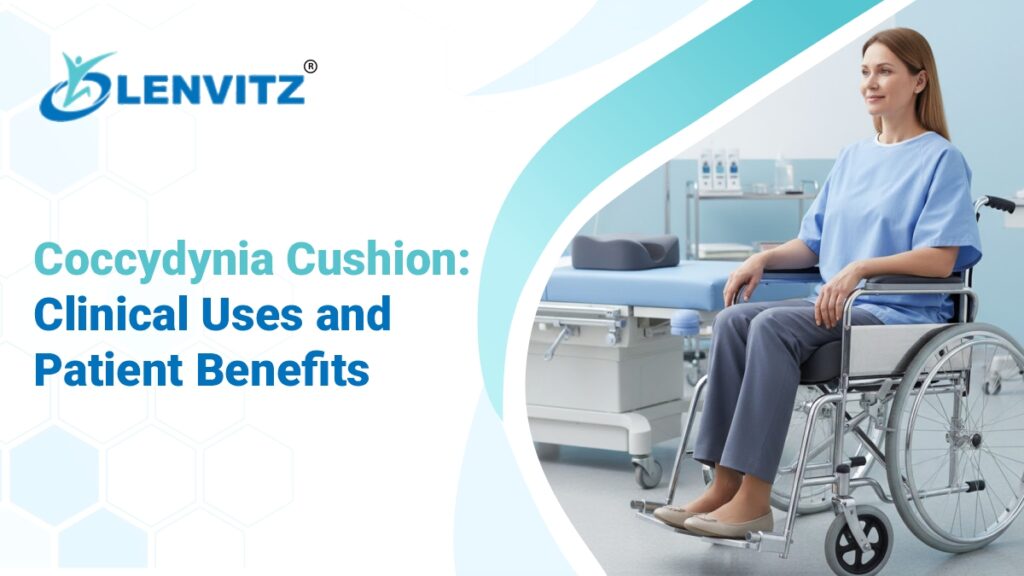
A coccydynia cushion is a specially shaped gel cushion designed to offload the coccyx during sitting. The defining feature is a cut-out or relieved section at the posterior of the cushion, which suspends the coccyx in space, eliminating direct contact with the seating surface. This cut-out design, combined with the pressure-redistributing properties of gel pads, addresses both the structural and material requirements for effective coccydynia management.
Key features to look for in a coccydynia cushion include:
- Anatomically shaped coccyx cut-out that adequately suspends the tailbone without compromising postural alignment.
- Gel pad or gel-foam hybrid construction for sustained pressure redistribution across the ischial region.
- Non-slip base to prevent movement during use particularly important for patients with reduced mobility or core instability.
- Cleanable cover or removable washable cover essential for daily use over extended recovery periods.
- Appropriate density: too soft provides insufficient support; too firm defeats the purpose of offloading.
It is worth noting that a standard donut-shaped cushion a common historical recommendation for coccydynia is no longer considered best practice by most physiotherapists and pain specialists, as the ring design can actually increase pressure on the coccyx in some positions. A contoured coccydynia cushion with a posterior cut-out is the preferred design based on current clinical guidance.
For Patients: If you are managing coccydynia, always seek assessment from a physiotherapist or pain specialist before selecting a cushion. The right product depends on the cause and severity of your condition, your sitting posture, and your daily activity patterns. A gel cushion is a supportive aid it does not replace treatment of the underlying condition.
Who Should Use a Medical Gel Cushion? Clinical Indications
Medical gel cushions are clinically appropriate for a broad and overlapping set of patient groups. Healthcare professionals should consider recommending a gel cushion and, where relevant, a specialist coccydynia cushion for patients in the following categories:
- Pressure injury risk: Any patient with a Braden Scale score indicating moderate to high risk, including those with reduced mobility, sensory impairment, or nutritional compromise.
- Post-surgical recovery: Patients recovering from haemorrhoidectomy, coccygectomy, perineal repair, spinal surgery, or hip replacement often experience significant sitting pain and benefit from gel cushion support.
- Coccydynia and tailbone pain: As described above, a purpose-designed coccydynia cushion with gel pad construction is the product of choice.
- Wheelchair users: Long-duration seated posture creates sustained interface pressure that foam alone cannot adequately manage. Gel-foam hybrid wheelchair cushions are a standard recommendation in seating assessment clinics.
- Elderly patients: Reduced adipose tissue, skin fragility, and reduced mobility all increase pressure injury risk. Gel cushions provide a practical and accessible preventive measure in both home and residential care settings.
- Patients with neurological conditions: Conditions such as spinal cord injury, multiple sclerosis, and Parkinson’s disease may involve reduced sensation, abnormal muscle tone, or impaired repositioning ability all of which elevate pressure injury risk.
- Obstetric patients: Perineal trauma following childbirth, particularly instrumental delivery, makes sitting acutely painful. A gel cushion or coccydynia cushion can significantly improve post-partum comfort during the recovery period.
Gel Cushions in Healthcare Environments: The WC Seat Cover Connection
One clinical context that is frequently overlooked when discussing therapeutic seating is the toilet or WC a setting where patients with coccydynia, post-surgical pain, or pressure injury risk may spend significant time and experience considerable discomfort.
Standard toilet seats are hard, non-padded surfaces that offer no pressure redistribution. For patients in the patient groups described above, transferring to and from the toilet and the act of sitting on it can be painful, unsafe, and hygienically problematic when the patient’s condition requires them to sit for extended periods.
This is where the intersection of gel pad technology and WC seat cover design becomes clinically relevant:
- Gel pad WC seat covers: Reusable seat covers incorporating silicon gel pad construction provide pressure redistribution on the toilet surface offering the same clinical benefit as a standard gel cushion but in a format designed for the WC environment.
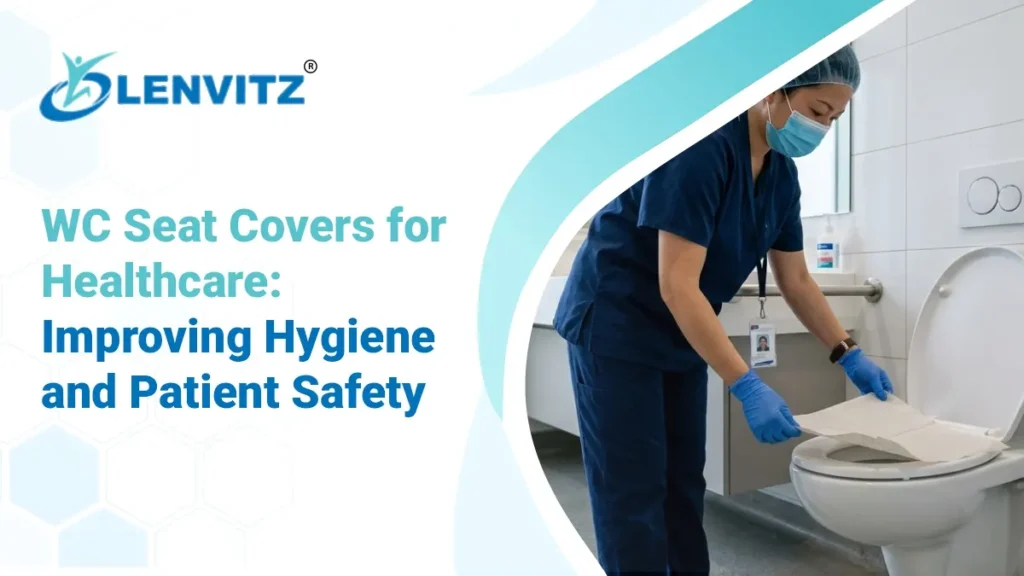
- Infection control compliance: In clinical settings, any reusable WC seat cover must meet equipment cleaning protocol standards. Silicon gel pad surfaces are non-porous and compatible with hospital-grade disinfectants, making them a clinically appropriate choice for inpatient environments.
- Disposable WC seat covers: For shared hospital restrooms, disposable seat covers in non-woven materials provide a single-use hygiene barrier reducing cross-contamination risk for immuno compromised or post-surgical patients.
- Post-operative and obstetric applications: Gel pad toilet seat covers are particularly valuable for patients recovering from perineal, haemorrhoidal, or pelvic surgery, who may find standard hard toilet seats impossible to use comfortably in early recovery.
Hospital procurement teams evaluating therapeutic seating solutions should consider gel pad WC seat covers as a complement to their gel cushion provision ensuring that pressure redistribution and hygiene support extend to every seating surface the patient encounters during their stay or recovery.
Choosing the Right Product: A Practical Buyer’s Guide
Whether you are a clinical professional or a patient making an independent decision, the following criteria provide a structured framework for selecting the most appropriate gel cushion or coccydynia cushion:
1. Identify the Clinical Indication
The right product depends on the reason for use. A patient with active coccydynia needs a coccyx cut-out design. A wheelchair user needs a full seating cushion with gel-foam hybrid construction. A post-surgical patient may need a softer gel product for short-duration sitting. Diagnosis first, product second.
2. Assess Sitting Duration
Products used for long-duration sitting (more than 2 hours daily) need higher-specification gel pad materials that maintain interface pressure reduction over time. Short-duration use allows for a wider range of product choices.
3. Consider the Setting
Clinical settings require cleanable, disinfectant-compatible surfaces. Home settings allow for a wider range of cover materials. Portable use (commuting, travel, office) favours lightweight, compact designs.
4. Check for Skin and Allergy Considerations
Patients with latex sensitivity should confirm products are latex-free. Those with skin fragility should look for gel pads with smooth, seam-free surfaces that minimise friction and shear forces.
5. Evaluate Maintenance Requirements
Reusable gel cushions require regular cleaning. In clinical settings, this means compatibility with approved disinfectants. At home, a removable, machine-washable outer cover adds convenience and supports long-term hygiene.
Conclusion
The difference between a medical gel cushion and a regular cushion is not merely a question of price or brand it is a clinical distinction that has meaningful implications for patient outcomes, comfort, and safety. Medical gel cushions and gel pads are engineered to actively redistribute pressure, support tissue viability, and withstand the hygiene demands of clinical environments. Regular cushions do none of these things reliably.
For patients managing coccydynia, recovering from surgery, using a wheelchair, or at risk of pressure injury, the choice of seating surface matters and it matters across every surface they sit on, including the WC. The integration of gel pad technology into WC seat cover design reflects a growing recognition that therapeutic seating support should not stop at the wheelchair or the hospital chair: it should follow the patient wherever they sit.
Healthcare professionals and administrators are encouraged to review their current provision of therapeutic seating including gel cushions, coccydynia cushions, and gel pad WC seat covers as part of a holistic approach to patient comfort, dignity, and pressure injury prevention.
Frequently Asked Questions (FAQ)
Gel cushions actively redistribute pressure laterally using the flow properties of gel material, maintaining lower interface pressure over time. Memory foam conforms slowly to body shape but can retain heat, does not actively redistribute pressure in the same way, and is typically not compatible with clinical disinfection protocols. For pressure injury prevention and pain management, gel pads are generally the preferred clinical choice.
No. A donut cushion has a full circular cut-out in the centre, which was historically recommended for coccydynia but is no longer considered best practice as it can increase pressure unevenly. A coccydynia cushion has a targeted posterior (rear) cut-out that suspends the coccyx specifically, combined with gel pad material for pressure redistribution. The shaped design provides better postural support and more targeted offloading.
A standard gel cushion is designed for chairs and wheelchairs and will not fit or function safely on a standard toilet seat. For toilet use, purpose-made gel pad WC seat covers are available — these are designed to fit the toilet seat profile, provide pressure redistribution, and (in clinical-grade versions) meet infection control requirements for cleanability and disinfectant compatibility.
Medical-grade gel cushions are designed for durability, but lifespan varies depending on usage intensity, weight load, and maintenance. Most manufacturers recommend inspection every 6–12 months for clinical users. Signs of replacement need include gel migration, surface breakdown, or loss of pressure redistribution performance. Always follow the manufacturer’s guidance and your facility’s equipment review protocols.
A gel pad WC seat cover can reduce pressure on the perianal region during toileting, which may help alleviate discomfort associated with haemorrhoids. However, it is a comfort and pressure management aid, not a treatment for haemorrhoids. Patients experiencing haemorrhoidal pain should seek medical advice for appropriate treatment, which may include dietary changes, topical preparations, or procedural intervention depending on severity.