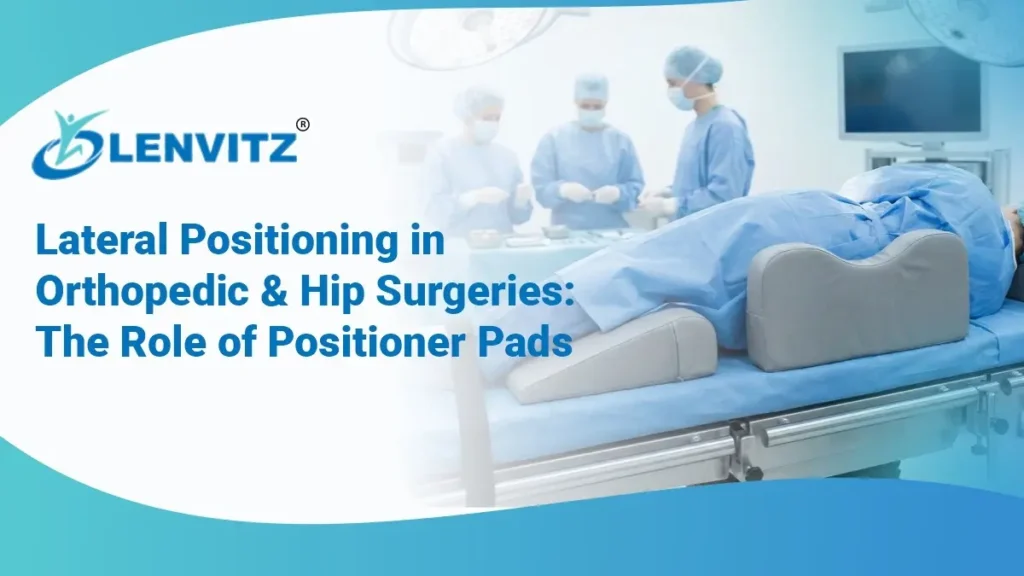
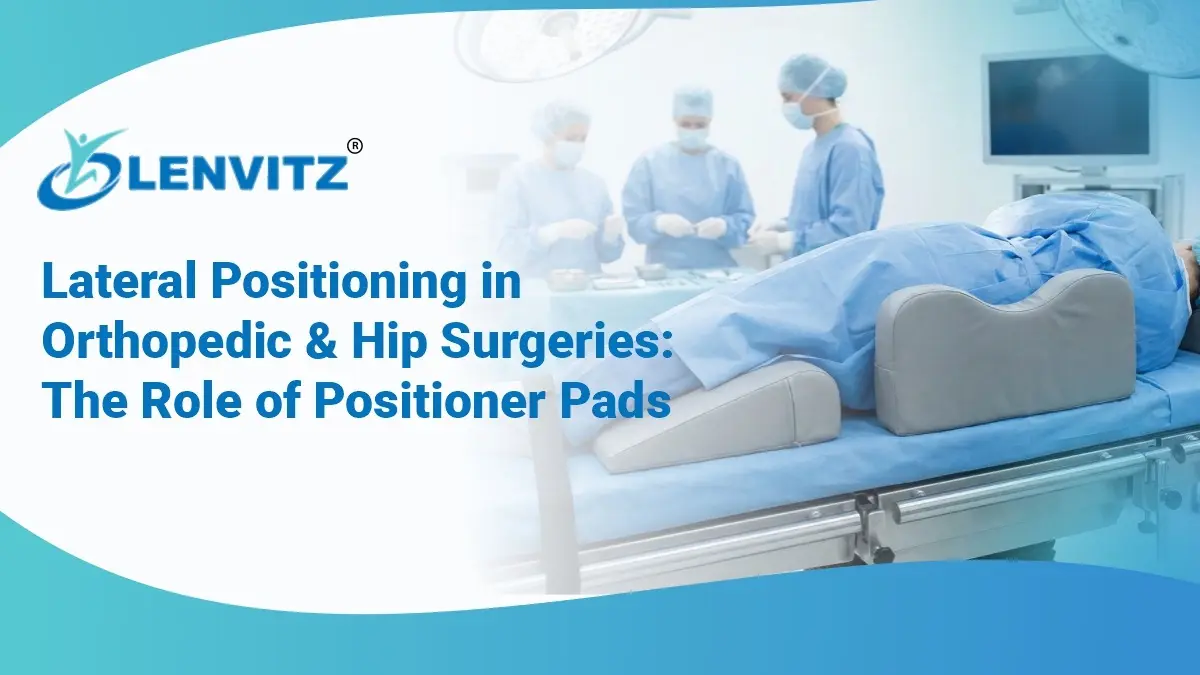
Surgery involving the hip and orthopedics usually requires the patient to be in the lateral position (lying on the side) to provide the surgeon with an appropriate view of the joint and bones. Although this position provides good access for the operation, it can exert excessive pressure on the shoulder, ribs, hips, and knees if the individual does not receive proper support. Patient Positioning Gel pads, as well as the lateral position gel pads, are created to address this issue by distributing the pressure, preserving the nerves, and holding the body steady on the operating table.
What is lateral position in simple terms?
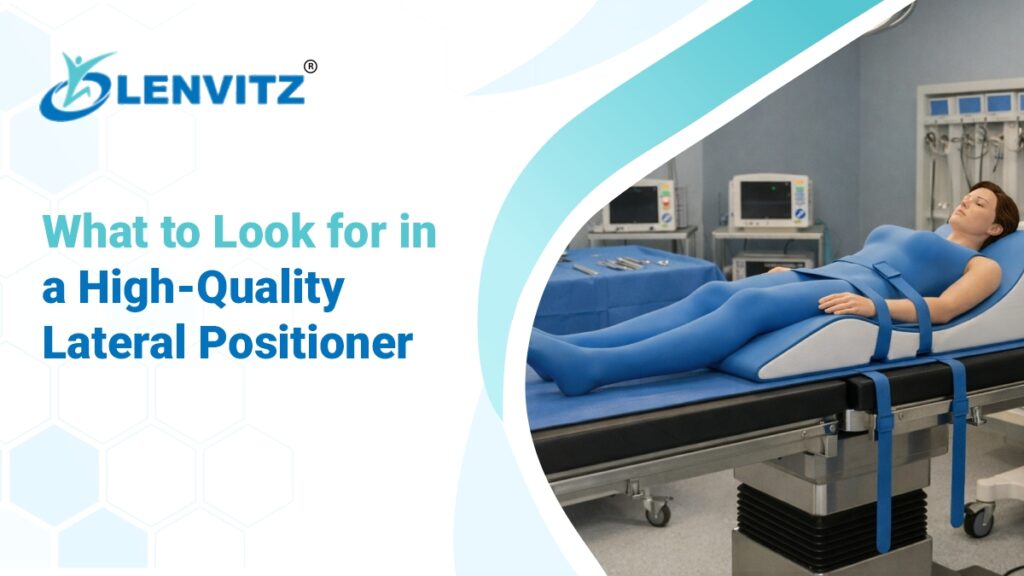
In the lateral position, the patient lies on the left/right side, with the side on which the hip is to be operated facing upwards. This is generally applied in total hip replacement, acetabular fracture fixation, and certain work on the femur.
To an average individual, the main points to note are:
- The table is in contact with only a few parts of the body the shoulder, the side of the chest, the hip bone, the knees, and the ankles.
- One spends one to several hours concentrating all body weight on these points, which may result in pain, numbness, or pressure sores unless properly cushioned.
- This is why hospitals have medical-grade lateral-position gel pads and other devices to cushion the patient as the surgeon operates.
The reason patient positioning gel pads are such a big deal
Patient Positioning Gel Pads The patient positioning gel pads are silicone cushions that are laid in between the patient and between the table or support. They are not just for comfort; they also serve as a safety device.
Main benefits for patients:
- Pressure relief: Gel distributes the body’s weight so there is no focal point (such as the hip or shoulder) where all the weight is concentrated.
- Protection of nerves: Elbow, shoulder, and hip padding helps prevent nerve damage that may lead to temporary or permanent numbness or weakness.
- Pressure management: enhances blood flow to muscles and skin, thereby lowering the risk of pressure injury.
For families studying surgery, inquiring about the hospital’s use of medical-grade patient positioning gel pads is a useful way to gauge the extent to which the hospital takes pressure care and comfort seriously.
Lateral Position Gel Pads: The Benefits of Their Use in Hip and Orthopedic Surgery
Special shapes of gel pads are designed to fit side-lying (lateral) surgery. They operate hand in hand with table-mounted hip positioners/supports.
These gel pads are typically used in orthopedic and hip operations when the torso and pelvis need to be supported to prevent the patient from rolling or dropping during the surgical procedure.
- The torso and pelvis should be supported to prevent the patient from rolling or dropping during the procedure.
- Pad the part near the greater trochanter (side of the hip bone) of the joint to ensure that it is not resting on a rigid surface.
- Position the padding between the knees and the ankles to prevent the lower leg from poking into the dependent leg.
This holds the spine firmly straight, the hip at a safe angle, and the skin safe points that most patients are not physically aware of but experience during their recovery.
The Prone Head Rest and Prone Position Gel Pads are designed to provide support and comfort during recovery.
Where The Prone Head Rest and Prone Position Gel Pads Fit In
When people hear words like “prone headrest” and “prone position gel pads,” they often become puzzled. The prone position is simply lying on the back. This type of positioning is common in spine surgery and certain complex orthopedic procedures.
In the prone position:
A prone headrest keeps the forehead and airway free and unrestrained.The body is not resting on sharp edges; the hips, knees, and ankles are supported with prone position gel pads.
Although you have written primarily about lateral positioning, describing the prone position shows readers that gel pads create a complete system of positions in surgery, not a single one.
An Easy Case: Total Hip Replacement in the Lateral Position
Suppose a patient is coming for a hip replacement:
- The patient lies on their side, and the hip to be operated on lies on a special table in an upright position.
- Pads under the chest, pelvis, and legs are placed on lateral-position gel pads to keep the body straight and supported.
Additional Patient Positioning Gel pads are placed between the knees and ankles, and beneath the lower arm and the elbow, to prevent bone-to-bone pressure and nerve compression.
As a patient, they can only recall that they were lying on their side and awoke after surgery, but this support system was hidden and is a major factor that they do not wake up with severe pain in their shoulders, hips, or legs caused by pressure.
FAQ’S
No. Lateral position gel pads, prone head rests, and prone position gel pads are used in many surgeries where patients lie on their side or face‑down, including spine, trauma, and some shoulder or leg procedures.
Yes. Older patients or those with thin, fragile skin benefit greatly from gel pads because they reduce friction and pressure that can tear or bruise the skin easily.
Many manufacturers offer different sizes and shapes, including smaller Patient Positioning Gel pads for pediatric patients. The idea is the same: match the pad size to the child’s body for safe support.
Yes. In lateral and prone positions, special head supports and prone head rests are used to keep the neck in a neutral, safe position and protect the face and ears from pressure.
Lateral position gel pads are shaped specifically for side‑lying support (chest, hip, legs), while general Patient Positioning Gel pads are more universal and can be placed under elbows, heels, or other small areas. Together they create a complete protection system.
Quality Patient Positioning Gel pads are designed with slightly tacky or non‑slip surfaces to stay in place on the operating table and under the patient. The surgical team also secures the patient with straps and supports to prevent any movement.