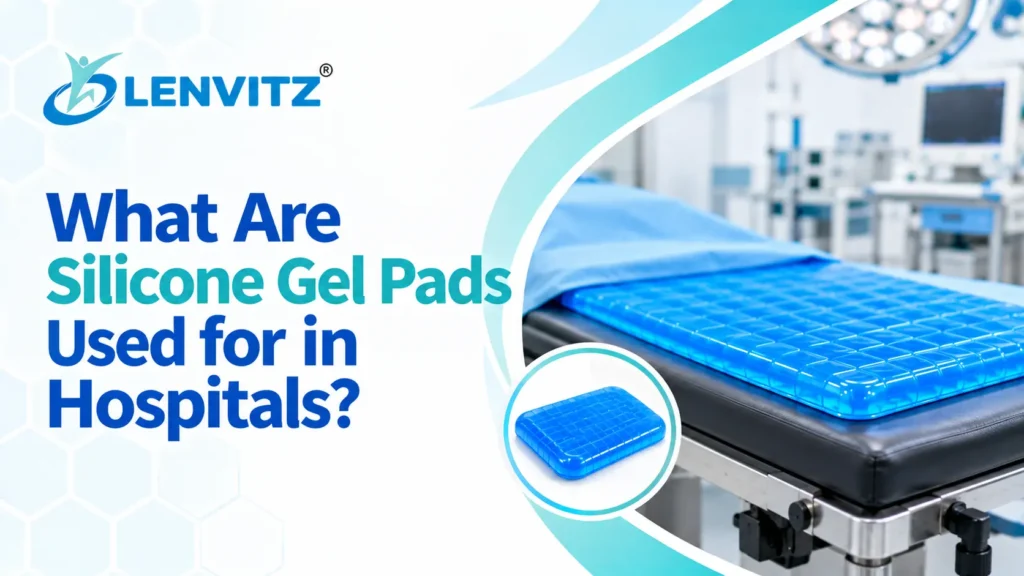
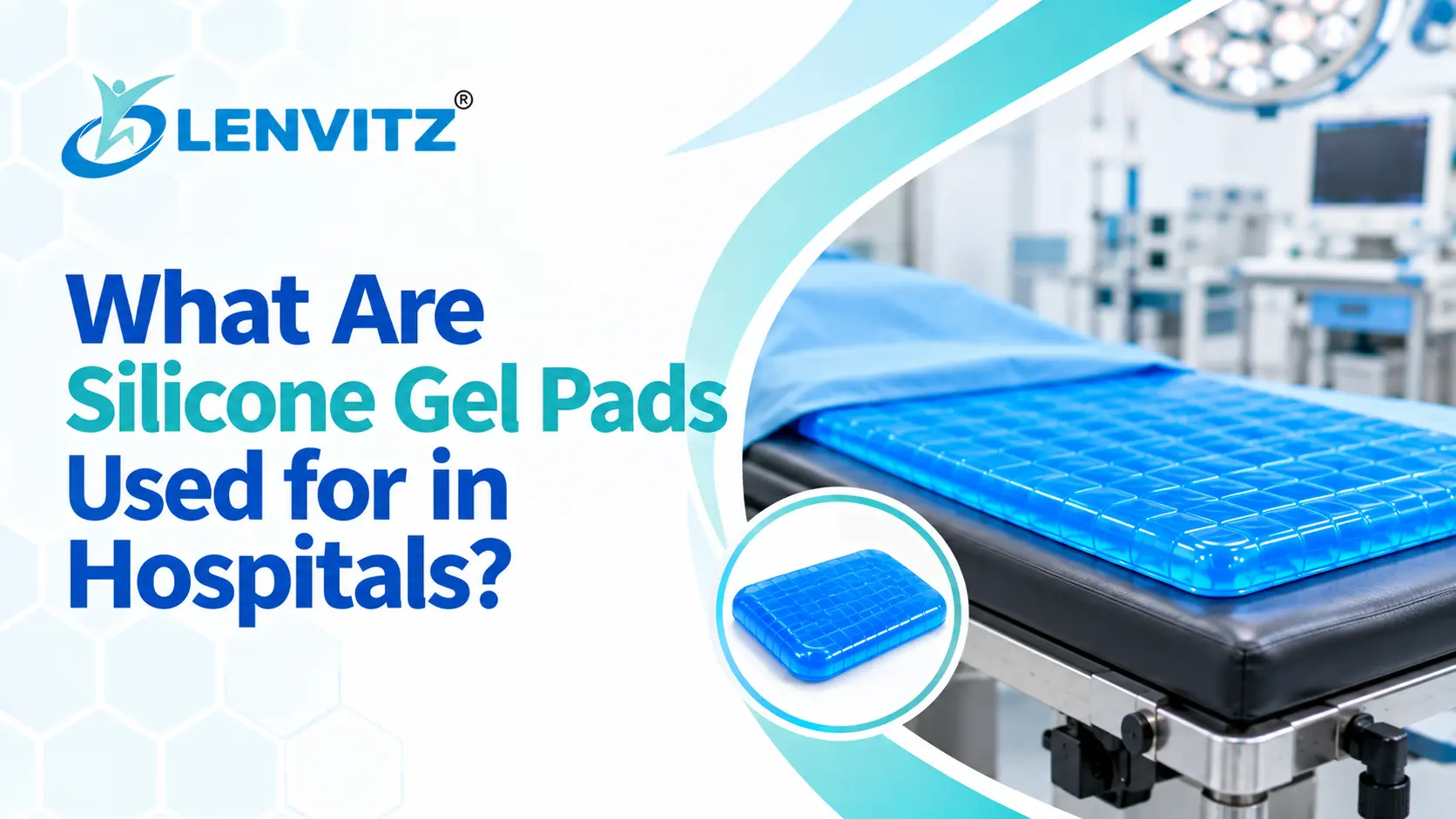
Hospitals use silicone gel pads to spread body weight and reduce pressure on bony areas, most often during surgery. They cushion the head, arms, sacrum, hips and heels on operating tables, help protect nerves from compression, and support patients on stretchers, beds, chairs and imaging tables. Most are reusable and are cleaned between patients according to the manufacturer’s instructions.
Why hospitals use gel instead of plain foam
A patient under anaesthesia cannot shift position or say that something hurts. Muscles are relaxed, and the body rests on the same few points for hours. Skin and soft tissue squeezed between bone and a hard surface lose blood supply, and a pressure injury can follow.
Gel pads answer this problem by deforming around the body and spreading load across a wider area. A flat table surface meets the heel or the sacrum at a small point. A gel surface flows around that point, so the same weight is carried by more tissue. That is the basic job of every pad in this guide.
Silicone is the usual material because it is smooth, non-porous and can be wiped down. Lenvitz Medical Solutions, a Pune manufacturer, describes its surgical silicone as leak-proof and able to be disinfected between uses.
Pressure injury prevention on the operating table
This is the largest use of pressure relieving gel pads. Each position loads different bones, so the pad sits where the risk is.
In the supine position, the usual pressure points are the back of the head, shoulder blades, elbows, sacrum and heels. In the lateral position, they are the ear, shoulder, hip, knee and ankle. In the prone position, they are the face, chest, hip bones, knees and toes. In the lithotomy position, the sacrum and heels carry load and the nerve at the outside of the knee is exposed.
Operating theatre teams use silicone gel pads in each of these set-ups: a head ring or head pillow, an overlay for the table, shaped pads for the heels and sacrum, and rolls or bolsters at the sides. Long cases matter most, because pressure and time work together.
Different procedures ask different things of a pad. A short eye or hand case may need little more than a head ring and an arm pad. A long abdominal, spine or joint case needs a fuller set-up, because the patient stays on the same surfaces for hours and the table may tilt during the case. Tilting adds shear, so a pad that stays put matters as much as one that cushions.
Protecting nerves
Pressure injuries are not the only risk. Nerves that run close to the skin can be compressed or stretched when a limb rests on a hard edge or sits in an awkward angle.
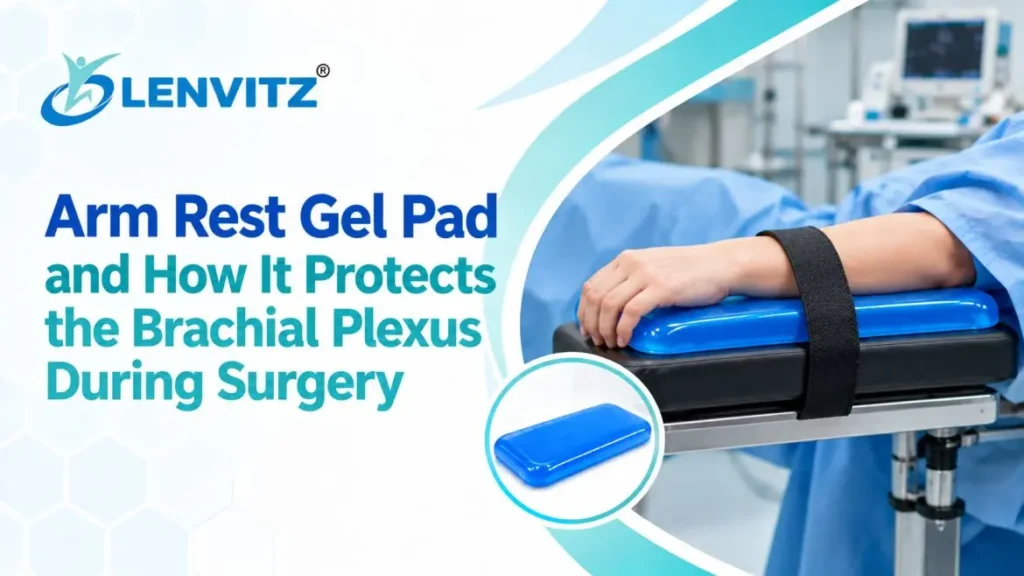
An arm rest gel pad on an arm board cushions the forearm and elbow, where the ulnar nerve runs close to the surface. Pads under the knees and at the outside of the lower leg protect the peroneal nerve, especially in lithotomy. Head and shoulder supports help keep the neck aligned, which matters for the brachial plexus, the network of nerves that runs from the neck to the arm.
A pad does not set the position by itself. If the arm is extended beyond 90 degrees or the head is turned hard to one side, nerves can still be stretched. The pad cushions. The team positions.
Head, arm, heel and body supports
Gel positioning products come in shapes made for particular jobs.
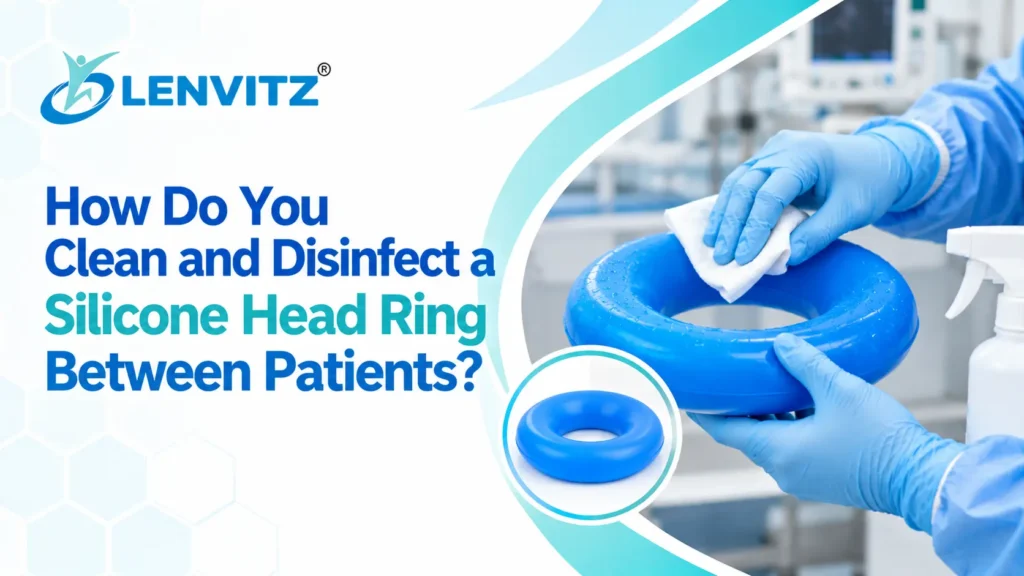
- Head rings and head pillows keep the head steady and stop the back of the skull from resting on a hard surface.
- Arm board pads cushion the arm and reduce shear against the board.
- Heel pads lift or cushion the heel, a common site of injury in supine patients.
- Table overlays cover a larger area and are used for longer cases.
- Positioning rolls, wedges and bolsters hold a patient on their side or tilt a hip or shoulder.
Some manufacturers combine gel with foam to improve handling and keep cost down. A combination pad can wear differently from a full gel pad, so ask which construction you are buying.
Uses outside the operating theatre
The same principle helps wherever a patient stays still for long.
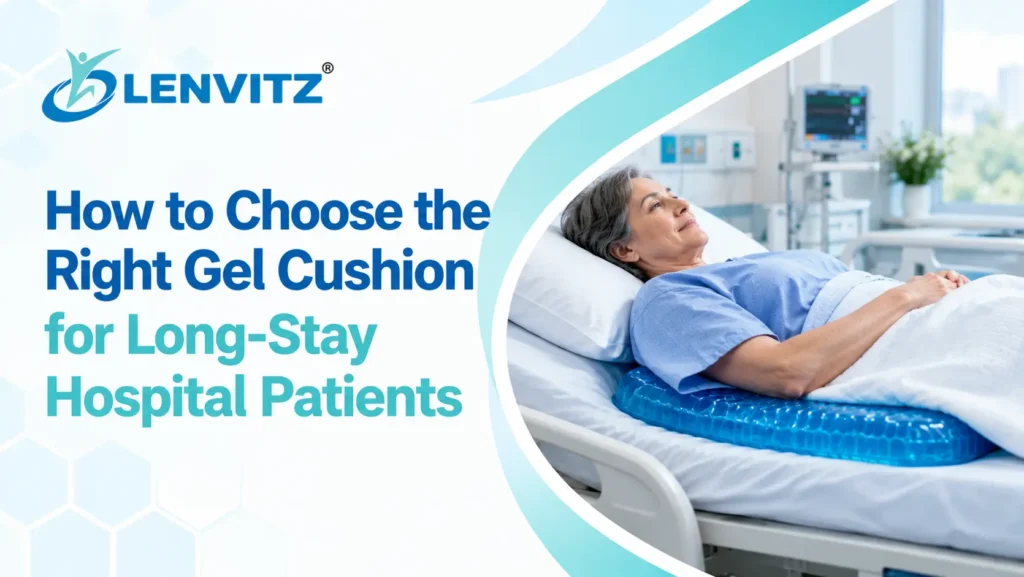
In intensive care, gel pads support patients who are sedated and cannot reposition themselves. On wards, they are used under the heels and at the sacrum for patients on bed rest. In the emergency department, a pad can make a hard stretcher more tolerable during a long wait. In radiology, padding helps patients lie still for scans, though pads used near an MRI scanner must be cleared for that environment by the maker. In recovery rooms and during transfers, a pad can protect the skin while a patient waits to move.
Gel is also used in wheelchair and chair cushions for patients who sit for long periods. These are separate products from OT positioning pads, so check the product’s stated purpose before using one in another setting.
Paediatric and neonatal use
Small patients cannot use adult pads. A pad that is too large pushes a child’s limb into a poor position, and a pad that is too stiff can press on fragile skin. Neonates have thin skin and little fat, so skin protection matters even more.
Lenvitz Medical Solutions makes gel products in adult, paediatric and neonatal ranges. If you treat children, ask for sizes made for them rather than cutting down or stacking adult pads.
Silicone gel, memory gel and foam
Hospitals commonly see three materials. Silicone gel flows around the body and is easy to clean. Memory gel is a viscoelastic material that moulds to the body slowly and then holds its shape. Lenvitz describes its silicone gel and its proprietary memory gel as almost equally effective at relieving pressure, so the choice often comes down to handling, weight, cleaning needs and budget.
Foam alone is lighter and cheaper but can lose support under pressure over time. For long cases or high-risk patients, many units prefer gel or a gel and foam combination. Your own pressure injury policy should guide the choice.
What gel pads do not do
A pad lowers risk. It does not remove it. Gel does not replace heel offloading, repositioning where the case allows it, skin checks, dressings, or a proper risk assessment before surgery. It also cannot correct a poor position.
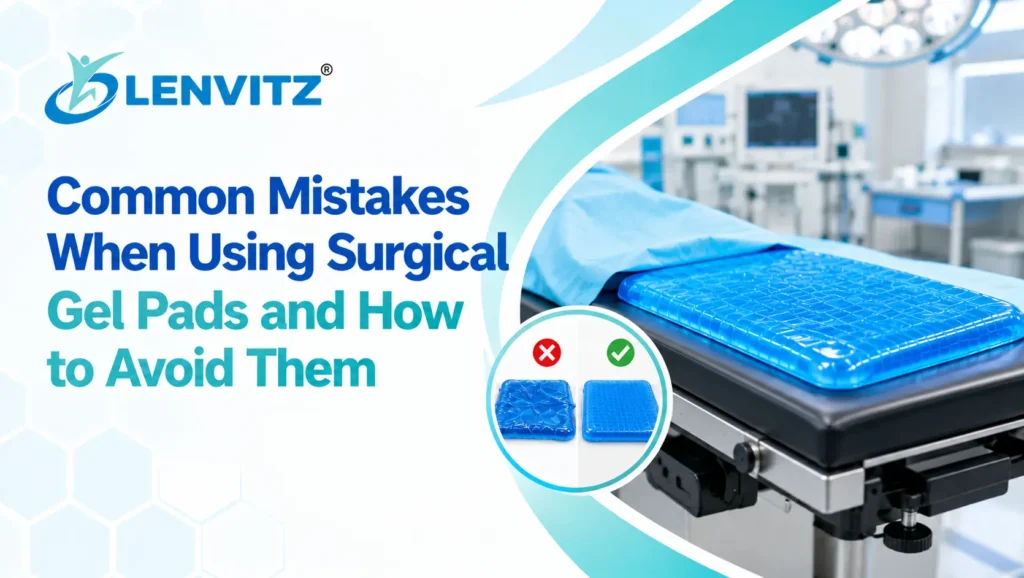
A worn pad is a quieter problem. A pad that is cut, flat or sticky still looks like protection, and the team trusts it. Inspect pads at every cleaning and remove any that are damaged.
Cleaning and infection control
Most positioning pads touch intact skin, so they are noncritical items and need cleaning and low-level disinfection between patients. Remove visible soil first, apply a disinfectant your infection control team has approved and the manufacturer allows, keep it wet for the full contact time on the label, then dry the pad and inspect it.
Use only products the maker permits. An unapproved disinfectant can harden, cloud or crack silicone, and a damaged surface holds soil. If a pad cannot be cleaned properly, it should leave service.
Staff also gain from them. A pad that holds its shape and wipes clean makes room turnover quicker, and a set-up that is easy to repeat is easier to teach to new nurses and technicians. Write the standard pad placement for each position into your theatre protocol so the set-up does not depend on who is in the room.
Single-use or reusable?
Reusable pads suit theatres where cleaning is reliable and checks are frequent. Single-use pads suit cases with contamination concerns or where reprocessing is hard. Many hospitals use both, reserving single-use items for the procedures where cleaning is difficult.
Reusable devices have a limited number of uses, so mark each pad with a use count and check it at every cleaning.
What to ask a supplier
Before you buy, ask for the following in writing:
- the gel type and the thickness and size options for each position
- cleaning and disinfection instructions, and the approved disinfectants
- the expected number of uses under normal reprocessing
- what the warranty covers and what it excludes
- paediatric and neonatal sizes, if you need them
If you want details on Lenvitz Medical Solutions products, ask for the specifications and cleaning guidance directly so you can match them to your own protocols.
The short version
Silicone gel pads protect patients who cannot protect themselves. They spread pressure, cushion nerves and support the body in the operating theatre and beyond. They work best when the right pad is placed at the right point, checked often, cleaned the right way and replaced when it wears.
FAQ’s
They spread body weight to reduce pressure on bony areas, cushion nerves and support patients during surgery, in intensive care, on wards, on stretchers and on imaging tables.
An anaesthetised patient cannot move or report pain. Gel pads spread load across a wider area so skin and nerves are not squeezed against a hard table for hours.
No. They lower risk but do not replace heel offloading, skin checks, repositioning where possible or a risk assessment before surgery.
Yes. Units use them in intensive care, on wards, in emergency departments, during imaging and in recovery. Chair and wheelchair cushions are separate products.
Remove visible soil, apply an approved disinfectant for the full label contact time, dry the pad and inspect it. Follow the manufacturer’s instructions and your facility’s policy.
When it is cut, leaking, flattened, sticky, cracked or stained beyond cleaning, or when it reaches the use limit the manufacturer states.