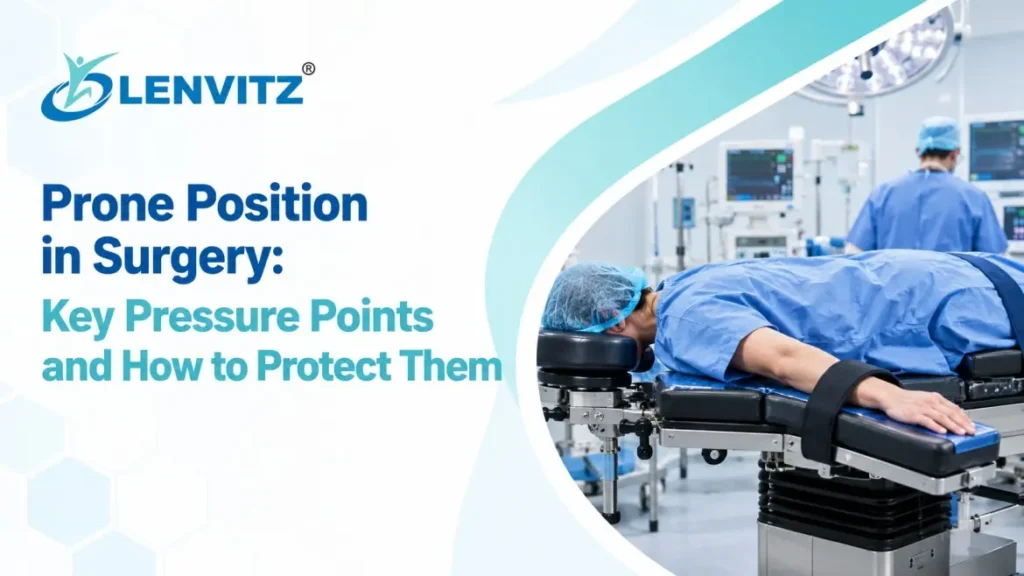
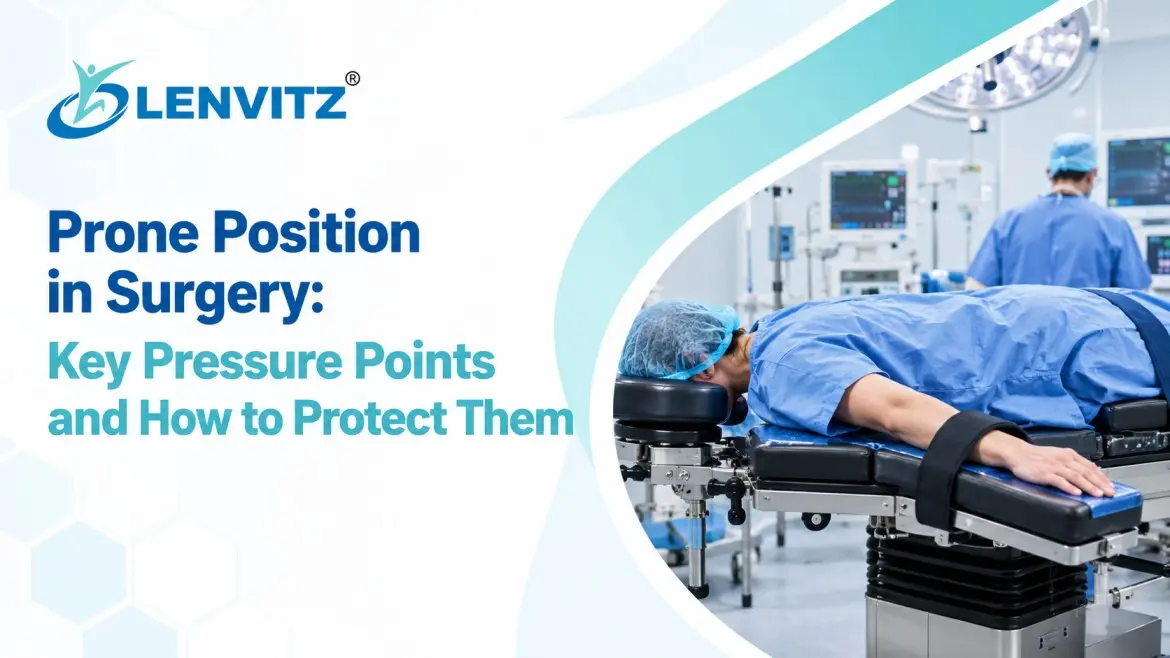
A patient lying face-down on the operating table can’t tell anyone if something feels wrong. Once they’re under anesthesia and positioned prone, every point of contact with the table stays fixed for however long the surgery takes often several hours in spine or neurosurgery cases. That stillness is what makes the surgery possible, but it also means the chest, hips, knees, and face are all under sustained pressure at the same time, in a position with almost no room for error.
Getting prone positioning wrong doesn’t just risk a pressure sore. It can restrict breathing, compress a nerve, or in the worst cases, cause permanent eye or airway injury. That’s why prone cases typically call for a full set of prone position gel pads rather than a single mat, since no one pad can protect every vulnerable area on its own.
This guide walks through the main pressure points in prone positioning, what puts each one at risk, and what a complete prone setup should include.
Why Prone Positioning Pressure Points Matter
Prone positioning is one of the more demanding positions to pad correctly, mainly because so much of the body is in contact with the table at once. A few things make the risk higher in this position specifically:
- Multiple high-risk zones at the same time. Unlike supine positioning, where the lower back and heels carry most of the weight, prone positioning spreads pressure across the chest, hips, knees, and face simultaneously.
- The face has almost no tolerance for pressure. Even a small amount of sustained pressure on the eyes or nose can cause lasting damage, which isn’t a concern in any other surgical position.
- Breathing can be restricted. Poor chest and abdominal support in this position can limit lung expansion, which matters over the course of a long procedure.
- These cases tend to run long. Prone positioning is common in spine and neurosurgery, two specialties known for extended operating times, so pressure has more time to cause harm.
Because of this, prone setups usually need more planning than other positions, not just more padding, but padding placed correctly across several areas of the body at once.
Chest and Hip Support
The chest and hips carry most of the patient’s body weight in the prone position. Support here has to do two things at once: cushion the weight and avoid restricting the chest’s ability to expand with each breath.
Main Pressure Points in the Chest and Hips
- Sternum and rib cage: Bears a large share of upper-body weight and needs support that doesn’t compress the chest wall.
- Hips and pelvis: Carry lower-body weight and are prone to concentrated pressure if the pad underneath doesn’t distribute weight evenly.
- Abdomen: Needs to stay free of pressure entirely, since compression here can raise abdominal pressure and interfere with breathing and circulation.
Chest and hip rolls made from silicone gel are shaped to lift the torso just enough to keep the abdomen clear while still supporting the ribs and pelvis. Used correctly, this setup on an OT table mat keeps the airway and breathing mechanics unaffected for the length of the case.
Knee and Lower Leg Support
The knees and lower legs bear secondary weight in prone positioning, and their position also affects blood flow to the feet and lower legs over a long procedure.
Main Pressure Points in the Knees and Lower Legs
- Kneecaps: Direct contact with the table can compress the patella and surrounding tissue if left unpadded.
- Shins and ankles: Poor support here can restrict circulation to the lower leg during longer cases.
- Toes: Often overlooked, but toes pressed flat against the table for hours can be a source of unnecessary pressure injury.
A gel pad placed under the lower legs, with enough give to let the toes hang free of the table surface, protects both the knees and the feet without needing separate padding for each.
Face and Head Support
The face is the single most sensitive area in prone positioning, and it’s the one place where even minor lapses in padding can cause serious harm.
Main Pressure Points in the Face and Head
- Eyes: Pressure on the eyes during a long prone case can cause vision loss, making this the highest-stakes pressure point in any surgical position.
- Nose and forehead: Extended contact can restrict breathing if a standard flat pad is used instead of a shaped support.
- Chin and cheeks: Uneven weight distribution across the face can lead to localized skin injury, especially in longer procedures.
A ring-shaped prone head rest is built specifically to hold the head steady while keeping all pressure off the eyes and nose, redirecting it instead to the forehead and cheekbones, areas that can tolerate sustained contact far better.
Shoulder and Arm Positioning
Depending on how the arms are placed, whether tucked at the sides or extended overhead, the shoulders and arms can also become pressure points that get missed during setup.
Main Pressure Points in the Shoulders and Arms
- Shoulders: Can bear uneven weight if the torso rolls aren’t positioned correctly on both sides.
- Elbows: Have very little natural padding and are prone to nerve compression, particularly the ulnar nerve, if left unsupported.
- Wrists and hands: Need to stay in a neutral position; prolonged awkward positioning here can lead to nerve strain that isn’t caught until after the surgery.
Padding the arms is often treated as an afterthought in prone setups, but it deserves the same attention as chest and hip support, especially in longer cases where the arms stay in one position for hours.
Why Silicone Gel Outperforms Foam in Prone Positioning
The reason silicone performs better than foam doesn’t change much from position to position, but it matters more in prone cases because there are more contact points to get right at once. Silicone molds around the chest, hips, and facial contours instead of flattening out the way foam does under sustained weight.
Foam padding compresses over the course of a long case, which means support that looked adequate at the start of surgery may have thinned out significantly by the two or three-hour mark, right when pressure injury risk starts climbing. Silicone holds its shape for the full length of the procedure, which is exactly when prone cases need it most, since spine and neurosurgery cases frequently run past that window.
Silicone pads also hold up to repeated sterilization without losing their supportive properties, which matters for hospitals running multiple prone cases in the same week. That consistency reduces the chances of a pad quietly underperforming because it’s worn down from repeated use.
Building a Complete Prone Positioning Setup
A complete prone setup isn’t one product, it’s a combination of chest and hip rolls, lower leg support, a facial head rest, and arm padding, all used together. Many operating rooms have chest rolls or a basic head support on hand, but a full setup that covers all four zones at once is less common, even though prone cases put pressure on all of them simultaneously.
A well-rounded prone kit should include support for:
- Chest and rib cage
- Hips and pelvis
- Knees and lower legs
- Face and head
- Shoulders and arms
It’s also worth checking the setup again partway through longer procedures. Padding can shift once a patient has been in position for an hour or more, and a support that was placed correctly at the start of the case isn’t guaranteed to stay that way without a check midway through.
FAQ’s
Because so many parts of the body are in contact with the table at once, chest, hips, knees, and face, and each needs different support. The face especially isn’t a pressure concern in any other position, which makes prone positioning uniquely demanding to pad correctly.
The face, specifically the eyes. Even brief, unmanaged pressure on the eyes during a prone case can lead to permanent vision damage, which makes head and face support the highest priority in any prone setup.
Not on its own. A general OT table mat provides a base layer of support, but prone cases still need dedicated chest, hip, knee, and head support layered on top of it to protect each pressure point individually.
For longer cases, it’s worth rechecking padding at least once partway through, since a patient’s position and the pads underneath can shift over the course of several hours.
Risk increases mainly after the two-to-three-hour mark, so shorter procedures carry somewhat less risk. Even so, face and eye protection matters regardless of case length, since that risk isn’t purely time-dependent.
Yes. A prone head rest is ring-shaped specifically to keep pressure off the eyes and nose, which a flat head pad used in supine or lateral positioning isn’t designed to do.