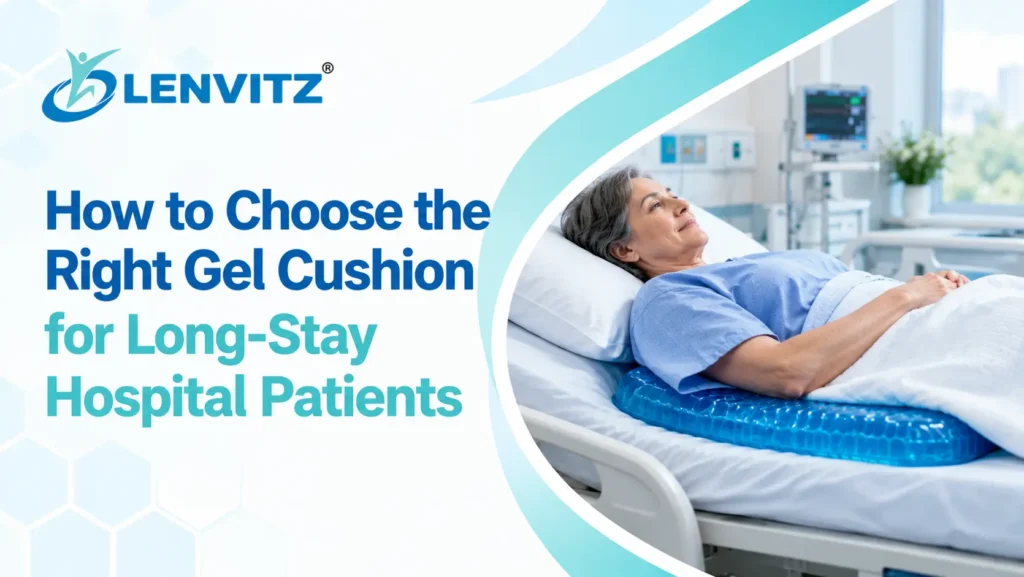
A patient who was admitted for a few days is now in week three. The care team is managing the diagnosis, the medications and the recovery plan, but the patient keeps shifting in bed, reaching for a pillow, and asking if there is anything softer to rest on. Pressure on the tailbone, heels, elbows and the back of the head has been building quietly, and the skin there is starting to show it.
This is the everyday reality of long-stay care. When someone spends most of the day in a bed or chair, the surfaces under them matter as much as the treatment itself. A well-chosen gel cushion spreads body weight over a wider area, softens contact with hard surfaces and helps nurses keep patients comfortable between repositioning rounds.
But not every cushion suits every patient or every body area. Picking the wrong one can waste budget and, worse, leave a vulnerable area unprotected.
This guide walks through how to choose the right gel cushion, arm rest gel pad, head gel pad and silicone head ring for long-stay hospital patients.
Why the Right Gel Cushion Matters for Long-Stay Patients
Short procedures and brief admissions put limited stress on the skin. Long stays are different. Tissue that is compressed for hours, day after day, loses blood flow, and damage can begin before anyone notices it. Several factors make long-stay patients especially vulnerable:
- Limited mobility: Patients who cannot shift their own weight stay in one position far longer than is healthy.
- Prolonged bed rest or sitting: Hours on the same surface concentrate pressure over bony areas.
- Moisture and friction: Sweat, humidity and sliding against bed linen or chair covers make skin more fragile.
- Age and nutrition: Older or undernourished patients often have thinner, less resilient skin.
- Medical devices and lines: IV lines, splints and monitoring equipment add extra points of contact.
- Reduced sensation: Some patients do not feel discomfort and cannot signal that something is wrong.
Support surfaces cannot replace turning schedules, skin checks and good clinical care. What they can do is reduce the load on the skin in between, which makes every other part of the care plan work better.
Gel Cushions for Seated and Wheelchair Patients
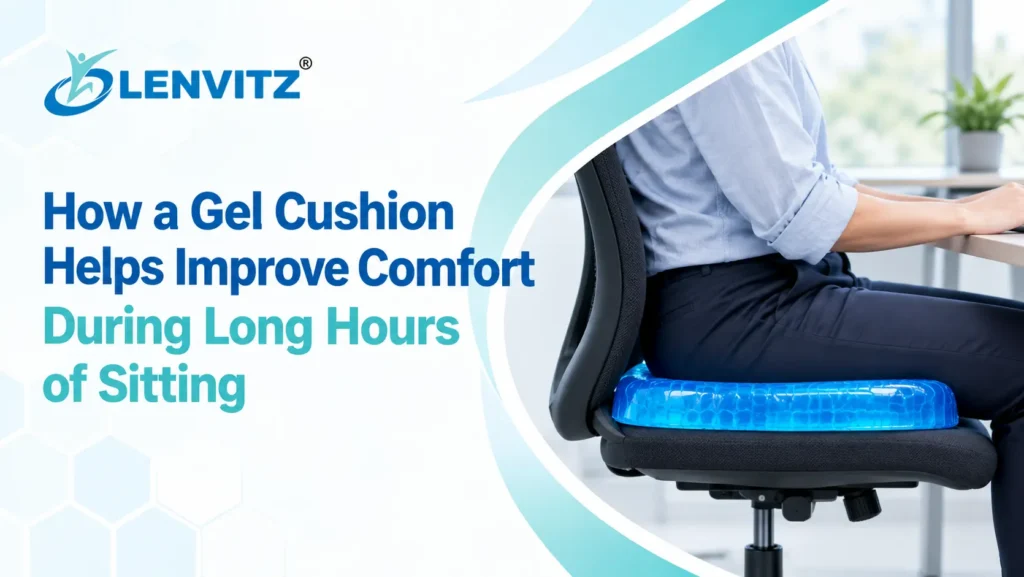
Many long-stay patients spend part of each day sitting, whether in a bedside chair, a recliner or a wheelchair. Sitting places most body weight on a small area, so the cushion underneath has a lot of work to do.
Main Pressure Points
- Ischial tuberosities (sit bones): These carry the largest share of weight when seated and are the first places to feel strain.
- Coccyx and sacrum: Patients who slouch or recline slightly press their tailbone into the seat.
- Outer thighs and hips: Narrow or hard seats create edge pressure along the thighs.
- Heels and feet: When feet rest on a footplate or floor, the heels take sustained contact.
A medical-grade silicone gel cushion conforms to the shape of the patient and distributes load across the whole seat instead of just the bony points. Look for a non-slip base, a cover that wipes clean easily, and a thickness suited to the chair. Choose the cushion size to match the seat so edges do not curl or slide.
Arm Rest Gel Pads for Elbows, Forearms and IV Access
Arms are easy to overlook. Yet patients on long-term infusions, dialysis or extended bed rest often keep their arms in the same position for hours, resting on hard bed rails, chair arms or procedure tables.
Main Pressure Points
- Elbows (olecranon): The bony tip of the elbow has very little padding and bears the load when leaning on a firm surface.
- Forearms and wrists: Constant contact with a hard rest can cause numbness and skin irritation.
- Ulnar nerve area: The nerve passes close to the surface at the inner elbow, so unprotected pressure can cause tingling or discomfort.
- IV and cannula sites: Skin near lines needs gentle, non-restrictive support to stay comfortable.
An arm rest gel pad lifts the arm slightly, cushions the elbow and keeps the limb in a neutral, relaxed position. Choose a pad with a smooth, wipeable surface so it can be disinfected between uses, and one wide enough to support the full forearm rather than just the elbow. For patients who receive regular infusions, a dedicated pad on the chair or bed arm makes each session more comfortable.
Head Gel Pads and Silicone Head Rings for Head and Neck Support
The back of the head carries more load than most people expect. For a patient lying face-up for days, the occiput takes sustained contact with the pillow or mattress. Patients who need head positioning or who have limited neck movement are even more at risk.
Main Pressure Points
- Occiput (back of the skull): The most common site of pressure in patients lying supine for long periods.
- Ears: In side-lying positions, the ears are folded against the surface and can become sore.
- Cheekbone and face: When a patient is turned, or in certain supported positions, the face can press on firm padding.
- Neck and base of the skull: Poor alignment strains the neck and can add to head pressure.
A head gel pad gives a soft, even surface that reduces concentrated pressure on the back of the head. A silicon head ring cradles the head and keeps it centered while leaving the contact points free from direct load, which makes it especially useful for patients who need steady positioning or who cannot reposition their head themselves. Choose a ring size that fits the patient’s head without pinching, and check that the opening is positioned correctly with each placement.
Why Silicone Gel Outperforms Standard Foam Padding
Foam is common in hospitals because it is inexpensive and familiar. For long-stay care, though, its limits show up quickly.
- Compression over time: Foam gradually flattens under repeated load, so protection fades just when it is needed most.
- Heat and moisture: Foam can trap heat and absorb moisture, which is hard on fragile skin.
- Infection control: Porous foam is harder to clean thoroughly between patients. Silicone gel has a smooth, non-porous surface that wipes down easily.
- Even load distribution: Gel flows around the body’s contours, spreading pressure over a larger area instead of leaving firm spots.
- Durability: Quality medical-grade silicone holds its shape through repeated cleaning and use.
Foam still has a place, particularly as a base layer or a low-cost option for short stays. For patients who will be in the hospital for weeks, silicone gel generally gives more consistent comfort and easier hygiene.
Building a Complete Setup for Long-Stay Patients
The best results come from thinking about the whole patient rather than one cushion at a time. A practical approach looks like this:
- Assess the patient’s main positions. Note how much time is spent in bed, in a chair and in a wheelchair, and what the main risks are for each.
- Match the product to the body area. Use a gel cushion for the seat, an arm rest gel pad for the upper limbs, and a head gel pad or silicone head ring for head positioning.
- Check size and fit. Products that are too small leave gaps, and those that are too large can shift or bunch.
- Prioritize cleanability. Choose smooth, non-porous surfaces that your infection control team can disinfect quickly between patients.
- Keep up with repositioning and skin checks. Cushions support the care routine but do not replace it.
- Inspect and replace. Look over each product regularly for wear, tears or loss of shape, and replace any that no longer perform.
Buying a consistent range from one supplier also simplifies stock management and staff training, and it makes it easier to standardize protocols across wards.
FAQ’s
A gel cushion is used to spread body weight over a larger area and reduce pressure on bony points. In hospitals, it supports patients who sit for long periods in chairs or wheelchairs, and helps improve comfort and skin protection.
Start with the patient’s mobility, how long they sit each day and the size of their chair. Look for a medical-grade silicone cushion with a non-slip base, a wipeable cover and a size that matches the seat.
An arm rest gel pad is a soft silicone pad that supports the elbow and forearm. It is helpful for patients who rest their arms on hard surfaces for long periods, such as those receiving infusions or spending long hours in bed or a chair.
Clean them between patients and whenever they are soiled, following the manufacturer’s instructions. Inspect them regularly and replace any that show cracks, tears or permanent loss of shape.