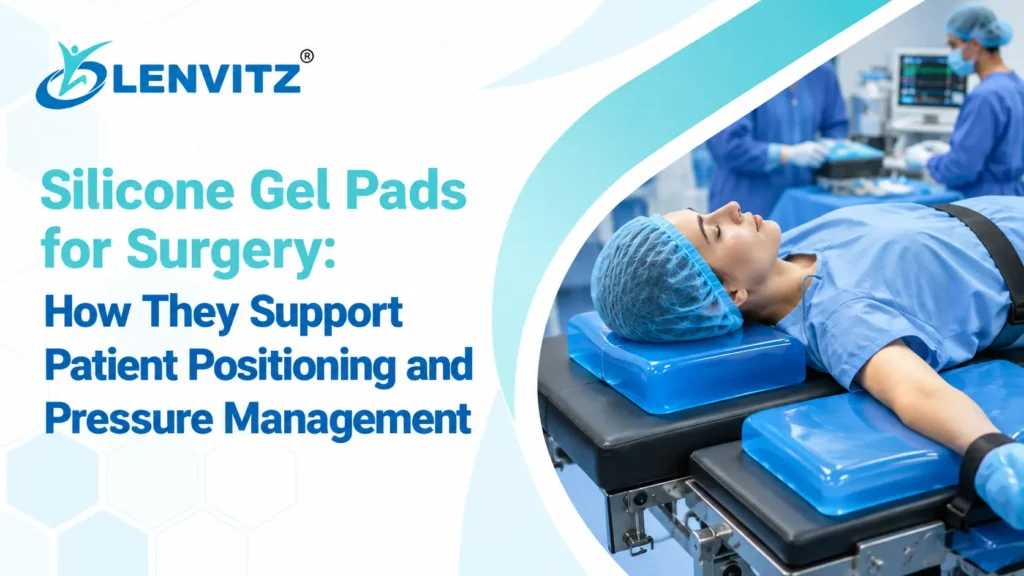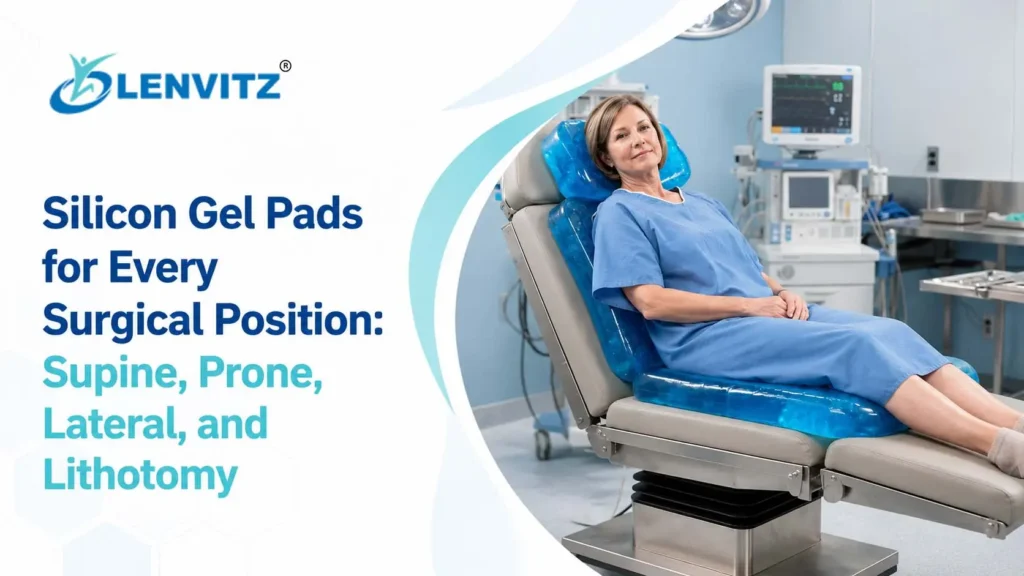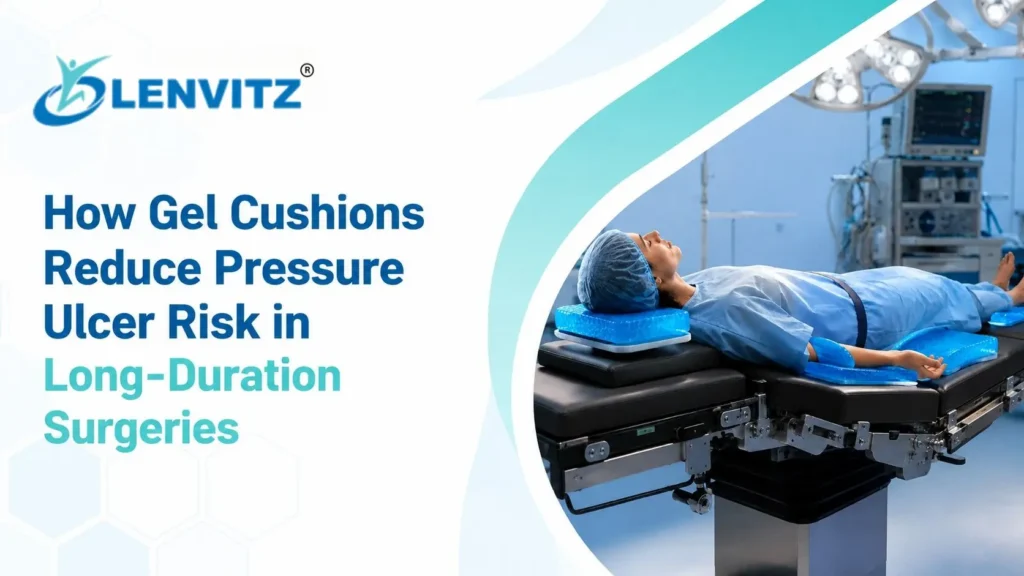
During a long surgery, a patient can’t shift their weight the way they would naturally while sitting or sleeping. Anesthesia keeps them still, sometimes for hours at a time. That stillness is necessary for the surgery, but it puts steady pressure on the same few spots on the body the whole time. Where that pressure builds up depends entirely on how the patient is positioned.
A patient lying flat on their back puts weight on different areas than a patient lying on their side. That’s why one type of pad can’t protect every surgery equally well. Silicon gel pads are shaped differently depending on the position a patient is placed in during surgery, because each position puts stress on different bones, nerves, and skin areas.
This guide walks through how patient positioning gel pads work for the four most common surgical positions: supine, lithotomy, prone, and lateral, and what each position needs to keep the patient safe.
Why Position Changes What Needs Protecting
Before getting into each position, it helps to understand why this matters so much. When part of the body presses against a hard surface for too long, blood flow to that area slows down. If it’s cut off for long enough, the skin and tissue underneath can be damaged, this is what leads to a pressure sore, also called a pressure injury.
A few things make this worse during surgery specifically:
- The patient can’t move. Anesthesia removes the small, natural shifts in position that a person makes without thinking, even while asleep.
- Blood flow can already be lower. Anesthesia and blood pressure changes during surgery can reduce blood flow on their own, making the skin more sensitive to pressure than usual.
- Some areas have very little natural padding. Bony areas like the lower back, heels, elbows, and the back of the head have almost no soft tissue to protect them.
- Longer surgeries mean more time under pressure. Most guidance points to the two-to-three-hour mark as when risk starts increasing noticeably, and it keeps rising the longer the case runs.
Because each surgical position puts weight on a different set of these vulnerable areas, the padding used also needs to change from position to position.
Supine Position Gel Pads
Supine means the patient is lying flat on their back. It’s the most common position used in surgery, so most hospitals already have some padding in place for it. But because supine cases can run for hours, even small gaps in padding can lead to problems that go unnoticed until after the surgery is over.
Main Pressure Points in Supine Cases
In this position, most of the patient’s weight rests on the lower back and heels. The back of the head can also be at risk during long procedures.
- Lower back (sacrum): This is the single most common area for pressure sores during surgery, since it carries the largest share of body weight while a patient is lying flat.
- Heels: The heels press directly against the table with almost no natural cushioning, which makes them easy to overlook during a busy case.
- Back of the head: Matters most in longer procedures where the head stays in one position for hours, such as cardiac surgery or general anesthesia cases.
Supine position gel pads are shaped to support each of these areas separately, rather than using one flat pad for the whole body. A pad that cushions the lower back, heels, and head individually does a much better job than a single sheet of padding, because each area has different tissue and different pressure needs.
Lithotomy Position Gel Pads
Lithotomy positioning is used when a patient’s legs need to be raised and supported in stirrups. It’s common in gynecological, urological, and colorectal surgery. It shares a lot with supine positioning, since the patient’s back is still resting flat on the table, but the raised legs add a set of risks that supine positioning doesn’t have.
Main Pressure Points in Lithotomy Cases
- Lower back: Still bears the patient’s weight, just like in supine positioning, even with the legs raised.
- Outer knee area: Where the leg rests against the stirrup, a nerve just under the skin can get compressed if there isn’t enough padding at that contact point.
- Back of the calf and knee: Poorly padded stirrups can press on this area and restrict blood flow over the course of a longer procedure.
Lithotomy position gel pads are built to protect the legs at the stirrups as well as the lower back. Since these procedures can run long, stirrup padding deserves just as much attention as the padding on the table itself, it’s easy to focus on the table and forget that the legs need separate support of their own.
Prone Position Gel Pads
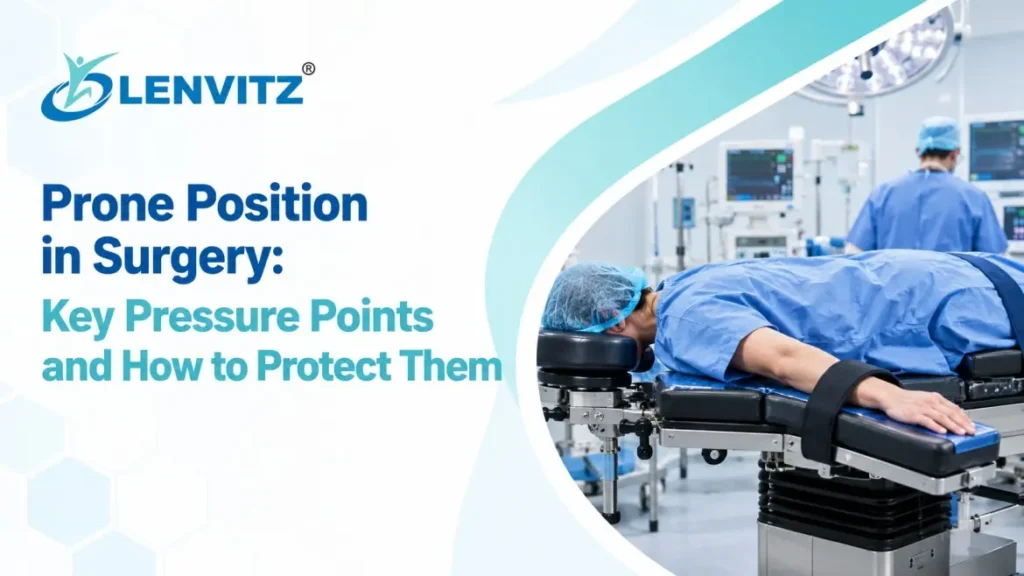
Prone means the patient is lying face-down. This is one of the trickier positions to pad correctly, because so many parts of the body are in contact with the table at once, including the face, which can’t tolerate much pressure at all without risking real harm.
Main Pressure Points in Prone Cases
- Chest and hips: Carry most of the body’s weight in this position and need support that cushions without restricting breathing.
- Knees: Bear secondary weight and can also be affected by nerve pressure, depending on how the legs are positioned.
- Face: Even brief pressure on the eyes or nose can cause serious injury, which makes this the most sensitive area to get right in any position.
Prone position gel pads usually come as a set rather than a single pad, since chest, hip, knee, and face support all need to work together to protect the whole body at once. A ring-shaped head support is especially important here, since it keeps pressure off the eyes and nose entirely instead of just softening it. This position is used often in spine and neurosurgery cases, which also tend to run long, so getting the padding right matters even more than usual.
Lateral Position Gel Pads
Lateral positioning means the patient is lying on their side. Out of all four positions, this one puts the most weight on the smallest area of the body. One shoulder, one hip, and one leg carry nearly everything, while the other side of the body barely touches the table at all.
Main Pressure Points in Lateral Cases
- Hip: Bears direct, concentrated pressure against the table for the entire case, since it’s one of the main contact points holding the patient’s weight.
- Shoulder and underarm: Poor support here can press on nerves running through the shoulder and arm, not just cause discomfort at the skin.
- Ear and side of the head: Can be compressed the same way the face is in prone positioning, just from a different angle.
Lateral position gel pads need to target each of these points specifically, since a flat or general pad won’t offload pressure the way a shaped one can. A support placed just below, not directly in, the underarm is also standard practice, to protect the nerves and blood vessels running through that area. This position comes up often in chest, kidney, and hip surgeries, where the surgical approach requires the patient to be turned onto their side.
Why Silicone Works Better Than Foam in Every Position
The reason silicon gel pads perform well doesn’t really change from position to position, only where that support is needed does. Silicone molds around bones and joints instead of flattening out under weight the way foam does over time. That means the same properties that protect the lower back in a supine case also protect the hip in a lateral case or the knee in a prone case.
Foam tends to compress the longer a patient stays in one position, which means the padding that felt adequate at the start of a case may not still be doing its job a few hours in. Silicone holds its shape and its supportive properties for much longer, which is exactly when a patient needs it most.
This also matters for hospitals running many different types of surgery. Silicone pads perform consistently no matter how long a position is held, are easy to clean, and hold up to repeated sterilization — something foam and single-use pads can’t match over time. For a facility running a high number of cases each week, that consistency also means less time spent replacing worn-out padding between surgeries.
Building a Complete Positioning Setup
Many hospitals have solid padding for supine cases, simply because it’s used the most. But lateral, prone, and lithotomy padding is sometimes an afterthought, put together using leftover or general-purpose pads instead of position-specific ones. This gap tends to show up in exactly the cases where it matters most longer, more complex surgeries like spinal and thoracic procedures that rely on these non-supine positions in the first place.
A well-rounded setup means having the right support ready for every case type: supine and lithotomy support, prone-specific pads, lateral positioning systems, and general-purpose gel pads for everyday use. Hospitals with a busy OT table schedule across different specialties benefit from keeping position-specific pads on hand, rather than adapting supine equipment for cases it wasn’t designed for.
It’s also worth checking padding again during handoffs, when a patient moves from the ward to the OT, and again from the OT to recovery. Padding can shift or get removed during these moves, and it’s easy to assume it’s still in place when it isn’t.
FAQ’s
Mostly yes, both rely on lower back support in the same way. But lithotomy cases also need stirrup and calf padding, which supine cases don’t require, so a lithotomy setup is really supine padding plus extra leg support.
Because so many parts of the body touch the table at once chest, hips, knees, and face and each needs different support. Face and eye protection especially isn’t a concern in any other position, which makes prone positioning uniquely demanding to pad correctly.
In lateral positioning, nearly all the body’s weight goes through just a few points; one hip, one shoulder, one ear instead of spreading out across the back the way it does in supine positioning. That concentration of weight raises the pressure at each individual point.
Pressure injury risk goes up mainly after two to three hours, so shorter cases carry less risk. But factors like a patient’s age or health condition can shift that timeline earlier, which is why many hospitals use gel pads as standard, regardless of expected surgery length.
It can offer some basic protection, but it won’t target the specific pressure points each position creates. A flat pad, for example, won’t protect against nerve compression in lithotomy or shoulder pressure in lateral positioning the way a shaped pad will.
A good starting point is reviewing padding position by position rather than as one general category checking whether lateral, prone, and lithotomy cases have dedicated support, or whether they’re relying on supine equipment that wasn’t built for those positions in the first place.