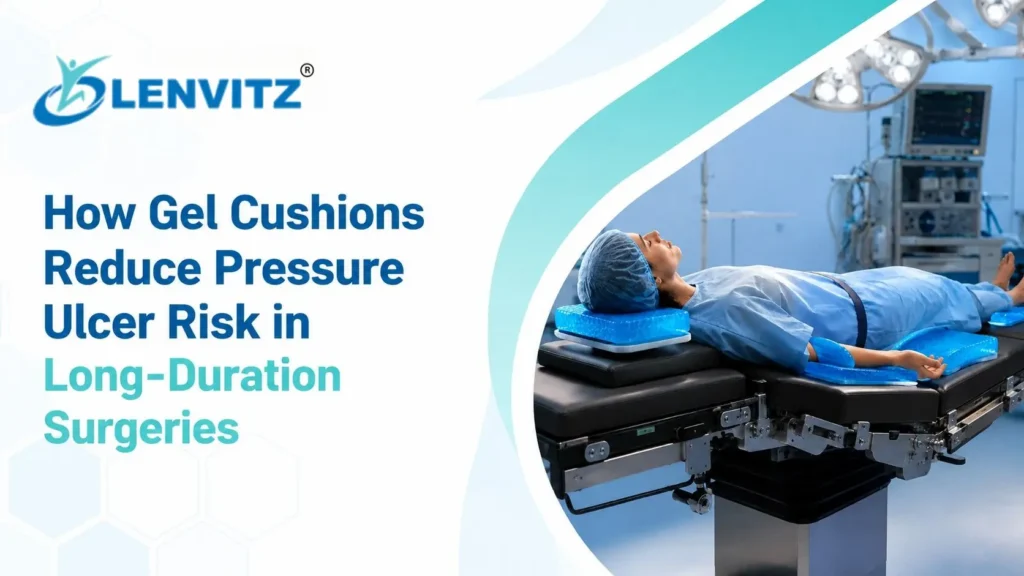
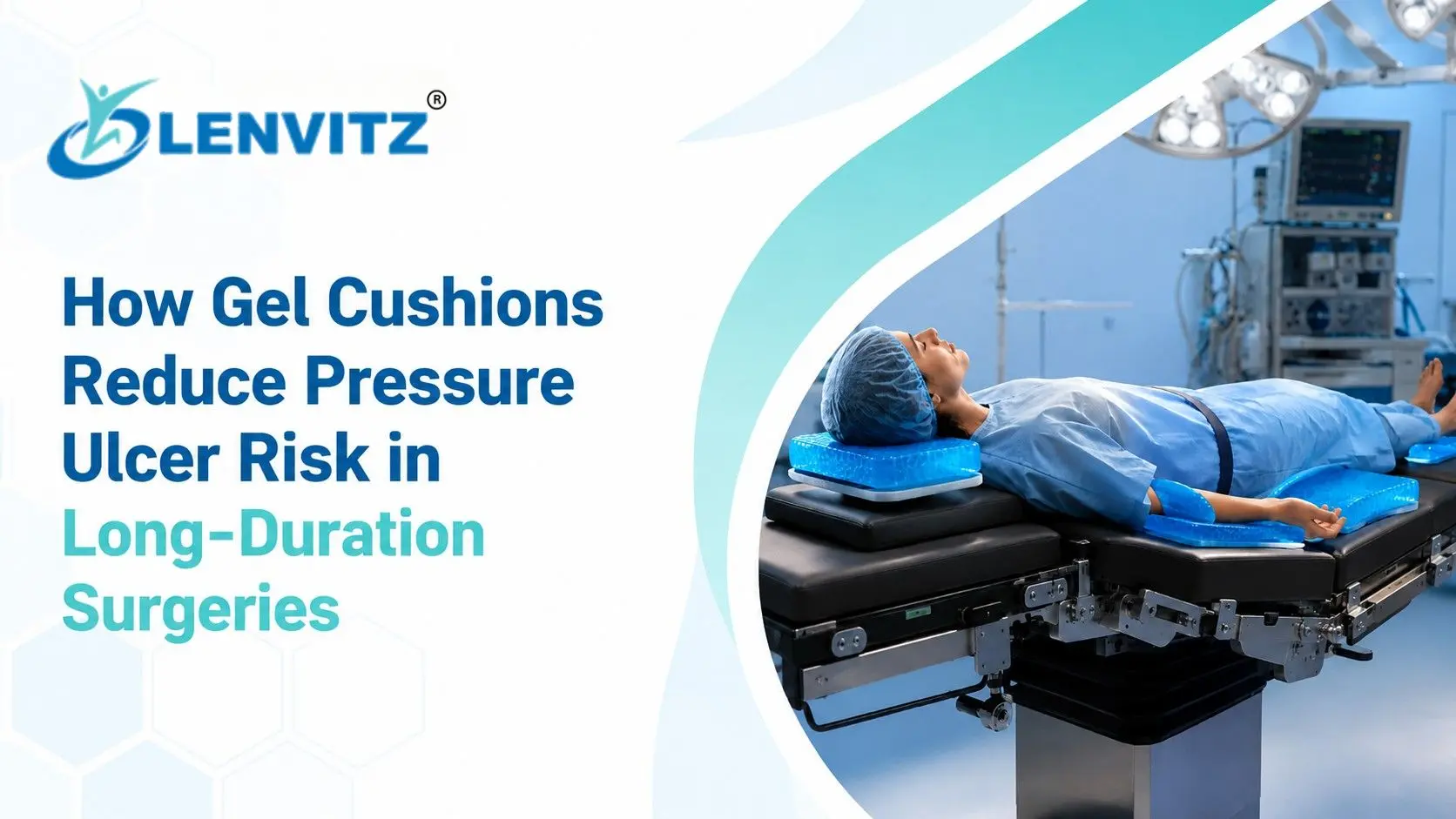
Every extra hour a patient spends immobile on an operating table raises their risk of developing a pressure injury. For surgeries that stretch past three or four hours cardiac bypasses, joint reconstructions, complex spinal procedures, that risk climbs sharply, and the consequences can follow a patient long after they’ve left the recovery room. A hospital-acquired pressure injury doesn’t just cause discomfort; it can extend length of stay, trigger additional wound care, invite infection, and in reportable cases, draw the kind of scrutiny hospitals actively work to avoid. This is where a well-designed gel cushion becomes more than a comfort item; it becomes a clinical safeguard built into the positioning plan from the moment a patient is laid on the table.
What makes long-duration surgery uniquely risky isn’t just the passage of time, it’s the complete absence of the body’s normal protective response during that time. A patient who’s simply lying in bed will unconsciously shift position dozens of times a night, relieving pressure before it becomes damaging. Under general anesthesia, that mechanism disappears entirely. Whatever position and padding is established at the start of a case is, in most instances, exactly what the patient remains in until the procedure ends.
Why Long-Duration Surgeries Put Patients at Risk
Pressure ulcers, also called pressure injuries or bedsores, develop when sustained pressure cuts off blood flow to skin and underlying tissue. Once local capillary pressure is exceeded for long enough, cells in that area are starved of oxygen and begin to die, a process that can start within one to two hours and continues to worsen the longer pressure is sustained. In an operating room, several factors compound this risk simultaneously:
- Immobility. Anesthesia removes the natural, subconscious shifting of body weight that healthy tissue relies on to relieve pressure. There is no equivalent protective reflex available to a fully anesthetized patient.
- Reduced perfusion. Anesthetic agents and blood pressure changes during surgery can lower tissue perfusion, making cells more vulnerable to ischemic damage at pressure levels that wouldn’t cause injury in a conscious, normally perfused patient.
- Bony prominences bearing load. Areas like the sacrum, heels, elbows, and occiput carry concentrated pressure because there’s little soft tissue to cushion the bone against the surface below, the tissue at these sites is doing the most work with the least natural protection.
- Shear and friction. Even small movements during positioning or transfer can drag skin layers against each other, damaging tissue independently of pressure alone. Shear is often underestimated because it doesn’t require a heavy load to be damaging, a small sliding movement under normal body weight is enough.
- Temperature and moisture at the interface. Prolonged contact with a surface raises local skin temperature and moisture, both of which independently lower tissue’s tolerance to pressure meaning two patients under identical pressure loads can have very different outcomes depending on what’s happening at the skin-surface interface.
Research consistently shows that surgeries lasting longer than 2-3 hours carry a meaningfully higher risk of intraoperative pressure injury, with risk continuing to climb the longer the procedure runs. Patient-specific factors compound this further elderly patients, those with diabetes or vascular disease, malnourished patients, and bariatric patients all carry elevated baseline risk, meaning the same surgical duration can produce very different outcomes depending on who’s on the table.
How a Gel Cushion Interrupts This Process
A properly designed silicone gel pad works by changing how pressure is distributed across the body, rather than simply adding softness. This distinction matters clinically, because a softer surface and a pressure-redistributing surface are not the same thing, a thick foam pad can feel soft to the touch while still allowing peak pressure to build up at a bony prominence over time.
1. Pressure Redistribution, Not Just Padding
Gel conforms to the body’s contours in a way rigid foam cannot. Instead of concentrating a patient’s body weight on a few high-pressure points, gel spreads that load across a wider surface area lowering peak pressure at vulnerable sites like the sacrum and heels. This conforming behavior is a property of the material itself: medical-grade silicone gel behaves in a semi-fluid way under sustained load, flowing laterally to increase contact area rather than compressing straight down and resisting further.
2. Consistent Performance Over Time
Foam compresses under sustained load and gradually loses its supportive properties over a long procedure, the padding that felt adequate at the start of a four-hour case may have bottomed out completely by hour two, silently reintroducing the exact pressure concentration it was meant to prevent. Medical-grade silicone gel maintains its density and conforming properties for the full duration of surgery, which is exactly when patients need consistent protection the most. This matters more in longer cases than shorter ones, the gap between gel and foam performance widens as the procedure goes on.
3. Heat and Moisture Management
Prolonged contact with a surface increases skin temperature and moisture, both of which lower tissue tolerance to pressure. Quality silicone gel cushions are formulated to limit heat retention compared to standard foam, helping preserve skin integrity throughout the case rather than compounding the mechanical pressure risk with a thermal one.
4. Shear Reduction During Repositioning
Because gel has a low-friction, conforming surface, it reduces the shear forces generated when a patient is repositioned or transferred, a major contributor to deep tissue injury that pressure redistribution alone doesn’t address. This matters not only during the procedure itself but during the handoffs before and after moving a patient from a trolley to the table, and from the table to recovery, are both moments where shear injury risk spikes if the transfer surface isn’t managed correctly.
Where Gel Cushions Matter Most in the OR
- Sacral and gluteal region — the most common site for intraoperative pressure injuries in supine positioning, and typically the site tracked most closely in hospital-acquired pressure injury audits
- Heels — thin tissue coverage over bone makes heels especially vulnerable during long procedures; heel injuries are frequently under-recognized because they’re not visually inspected as often as the sacral area during a case
- Occiput — critical in prone and lateral positioning, and in pediatric and bariatric cases where head weight is proportionally higher relative to body size
- Elbows and lateral hip — high-risk zones during lateral positioning for thoracic, renal, and hip procedures, where the dependent side bears concentrated, asymmetric load for the full case
Facilities running longer case types; orthopedics, cardiothoracic, neurosurgery, bariatric surgery see the clearest benefit from standardizing gel cushion use across positioning protocols, since these are the cases where cumulative pressure time is highest and the margin for error is smallest. In these specialties, pressure injury prevention isn’t a peripheral concern; it’s directly tied to the case types the facility runs most often.
Gel Cushions as Part of a Broader Prevention Protocol
No single product eliminates pressure ulcer risk on its own, and treating a gel cushion as a complete solution rather than one component of a layered approach is a common and avoidable gap. A complete prevention protocol includes:
- Pre-operative skin assessment and risk scoring, so higher-risk patients — elderly, diabetic, vascular disease, malnourished, bariatric are flagged before positioning begins, not identified retrospectively after an injury is found
- Position-specific padding at every bony prominence relevant to that position, not just under the sacrum — a protocol that covers the highest-visibility site well while leaving heels, elbows, or the occiput under-protected is only partially effective
- Scheduled micro-repositioning where surgically feasible, since even small periodic shifts in pressure distribution can meaningfully reduce cumulative ischemic time at any single point
- Post-operative skin checks and documentation, so injuries are caught early and the data feeds back into refining the facility’s positioning protocol over time, rather than each case being treated as an isolated event
Hospitals that pair the right gel support surfaces with these protocols typically see the most meaningful reductions in hospital-acquired pressure injury (HAPI) rates, a metric increasingly tied to quality reporting and reimbursement, and one that’s become a standard marker of surgical safety culture more broadly.
Choosing the Right Gel Cushion
Not all gel cushions are built for OR use, and the difference between a general-purpose gel cushion and one engineered specifically for surgical positioning is significant. When evaluating options, look for:
- Medical-grade silicone gel rather than generic polymer gel, for consistent long-term performance and easy sterilization, generic gel formulations can degrade faster under repeated disinfection cycles and lose their conforming properties sooner
- Position-specific shaping — sacral, heel, and prone-specific cushions are contoured differently for a reason, and a flat, generic cushion won’t provide the same protection at each of these distinct anatomical sites
- Radiolucency where imaging compatibility is needed intraoperatively, so the cushion doesn’t need to be removed or repositioned for imaging during the case
- Easy-clean, puncture-resistant covers that hold up to repeated sterilization cycles without degrading, since a cushion that needs frequent replacement due to cover damage adds cost and creates gaps in coverage during replacement periods
FAQ’s
Most clinical guidance points to the 2-3 hour mark as the threshold where intraoperative pressure injury risk starts rising significantly, with risk continuing to increase for every additional hour of immobility. Patient-specific risk factors can shift this window earlier for higher-risk individuals.
No single device eliminates risk entirely. A gel cushion significantly lowers peak pressure and shear at vulnerable sites, but it works best alongside risk assessment, position-specific padding, and post-operative skin checks as part of a complete protocol.
Yes, medical-grade silicone gel cushions with puncture-resistant, wipeable covers are designed for repeated use and standard sterilization protocols, unlike single-use foam alternatives making them a more sustainable and often more cost-effective choice over time for high-turnover operating rooms.
Yes. Position-specific gel supports are used in lateral, prone, and lithotomy positioning as well, targeting the specific bony prominences that bear load in each position, the sacrum in supine, the lateral hip and elbow in lateral positioning, and the chest, iliac crests, and knees in prone positioning
Facilities that track HAPI rates as a quality metric often find that standardizing gel cushion use across high-risk case types is one of the more direct, measurable interventions available, since it addresses the mechanical root cause of pressure injury rather than only improving detection or documentation after the fact.