Every surgery carries risks that the patient consents to anaesthetic complications, bleeding, infection, the procedure itself. What patients do not consent to, and what no surgical team intends, are the injuries that happen not because of the surgery but because of how the patient was lying on the table. Pressure injuries, peripheral nerve damage, compartment syndrome, and positional ischaemia are not rare edge cases. They are documented, measurable complications of surgical positioning that occur across specialties, across patient profiles, and across the entire duration of a procedure from the moment the patient is laid out to the moment they are moved to recovery.
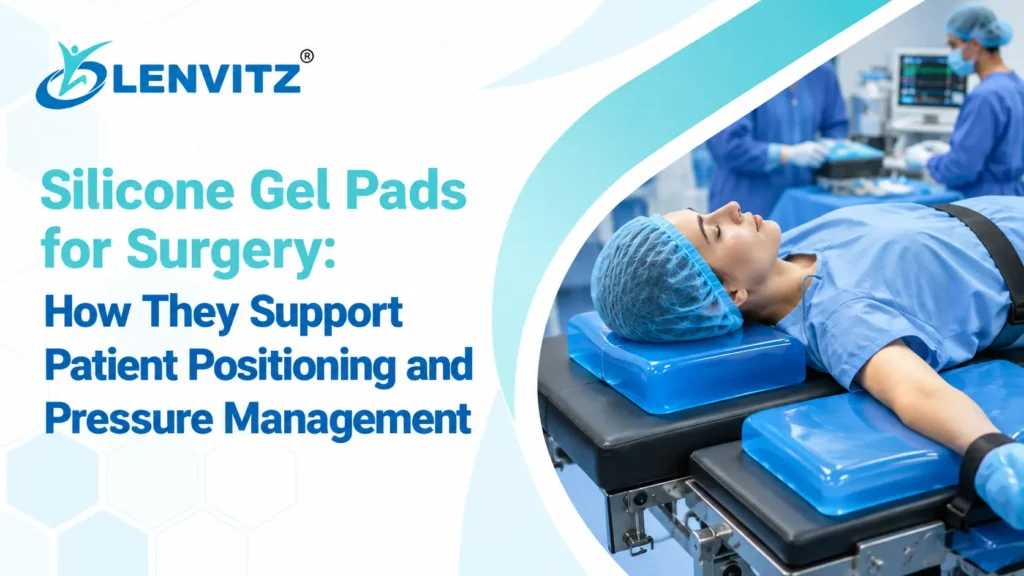
Patient positioning gel pads are the primary device-level intervention that operating rooms use to control these risks. Not rolled blankets, not foam wedges, not standard table padding medical-grade silicon gel pads designed specifically for the compressive, traction, and shear forces that arise in surgical positioning. Understanding how they work, which type belongs where, and why the OT table surface itself matters as much as the surgical technique is foundational knowledge for every scrub nurse, anaesthetist, and theatre manager responsible for patient safety in the operating room.
Why Patient Positioning Causes Injuries in the First Place
A patient under general anaesthesia cannot shift their weight, reposition their limbs, or signal discomfort. This is the fundamental difference between surgical positioning and any other form of supported lying. In normal sleep, a person changes position 20–40 times per night without conscious effort, redistributing pressure and restoring perfusion to compressed tissues. On an operating table, that protective mechanism is completely absent for the entire duration of the procedure.
The four primary injury mechanisms in surgical positioning:
- Sustained pressure over bony prominences – The sacrum, occiput, heels, iliac crests, fibular heads, and elbows all concentrate compressive force against the table surface. When capillary perfusion pressure (approximately 32 mmHg) is exceeded and sustained, tissue ischaemia begins within 1–2 hours, and irreversible pressure injury can occur even in a single intraoperative episode
- Shear forces at the skin-surface interface – When the body is positioned at an angle and gravity pulls it in one direction while the table surface resists movement, the skin and subcutaneous tissue slide against each other internally. This shear stress is more damaging than direct pressure and occurs whenever patients are on tilted tables, in the Trendelenburg position, or in the kidney-elevated flank position
- Traction and stretch on peripheral nerves – The brachial plexus, ulnar nerve, common peroneal nerve, and femoral nerve are all vulnerable to positional traction when limbs are placed in sustained extreme positions without adequate support
- Venous and arterial compression – Improperly positioned limbs, particularly in the lithotomy position, can compress popliteal and femoral vessels, reducing distal circulation and increasing the risk of deep vein thrombosis and compartment syndrome
Understanding how OT table positioning gel pads minimise intraoperative complications begins with recognising these four mechanisms, because a patient positioning gel pad needs to address all of them simultaneously not just provide a softer surface.
What Makes Silicon Gel Pads the Clinical Standard
Before examining how patient positioning gel pads are applied across surgical positions, it is worth understanding why silicon gel pads specifically are the material of choice for medical-grade surgical positioning, and not foam, air, or gel-foam composites.
The material properties that matter:
- Viscoelasticity – Medical-grade silicon behaves like a fluid under sustained load, flowing laterally to increase contact surface area and reduce peak interface pressure. This is fundamentally different from foam, which compresses vertically and creates a progressively harder resistance surface as it bottoms out
- No bottoming-out under sustained load – A foam pad under a patient’s sacrum for 4 hours has lost most of its cushioning by hour 2. Silicon gel pads maintain their pressure-redistributing properties across the full procedure duration, providing equivalent protection at the end of a long case as at the beginning
- Conforming to body contours – The irregular surfaces of bony prominences, surgical positions, and individual patient anatomy all require a positioning material that adapts to the shape beneath it. Silicon gel conforms dynamically, ensuring full surface contact even at irregular interfaces
- Biocompatibility and hygiene – ISO 10993-certified medical-grade silicone is non-toxic, non-reactive with skin, and can be disinfected with IPA and other clinical-grade disinfectants without material degradation — a critical property for high-turnover OT environments
For a direct clinical comparison, medical gel cushions vs regular cushions explains in detail why the material difference translates to a measurable difference in patient outcomes.
Patient Positioning Gel Pads Across Surgical Positions
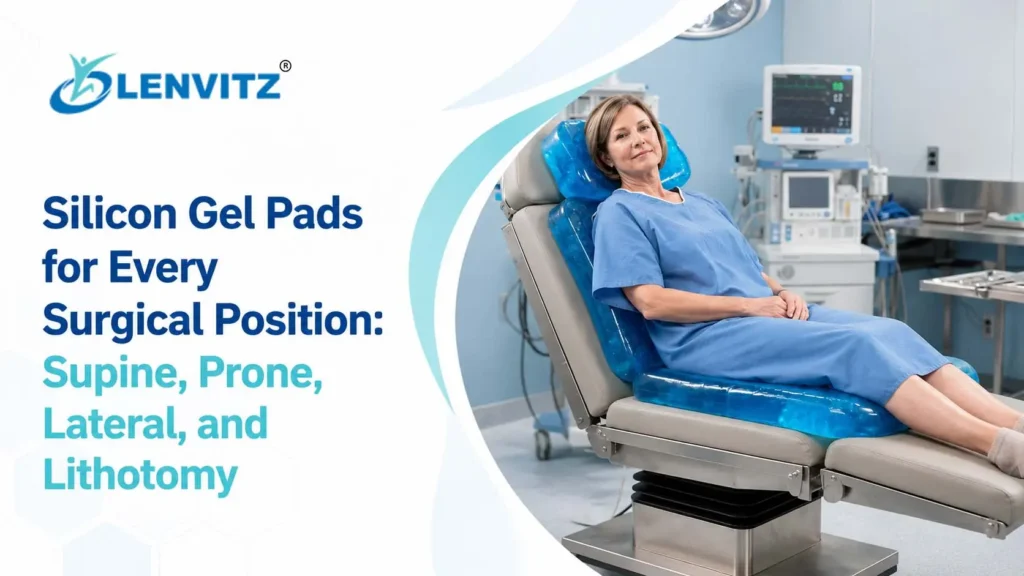
1. Supine Position – The Highest-Volume Positioning Risk
The supine position is the most common surgical position, used across general surgery, cardiac, abdominal, and urological procedures. Because it appears simple, its positioning risks are often underestimated. The patient’s full body weight is distributed across the posterior surface, with the sacrum, occiput, shoulder blades, elbows, and heels all bearing concentrated load.
Primary pressure injury sites in the supine position:
- Sacrum – The highest-risk site for intraoperative pressure injury; accounts for the majority of OR-acquired pressure ulcers across all specialties
- Occiput – Particularly vulnerable in long procedures and in elderly patients with thin scalp tissue; silicon gel pads head rings or head section OT table positioning gel pads protect this zone
- Heels – Elevated heel pressure in the supine position is the second most common intraoperative pressure injury site; heel gel pads maintain perfusion to the posterior ankle and Achilles region
- Elbows – Ulnar nerve compression at the medial epicondyle occurs when arms are not adequately supported and padded
Key benefits of silicon gel pads in supine positioning:
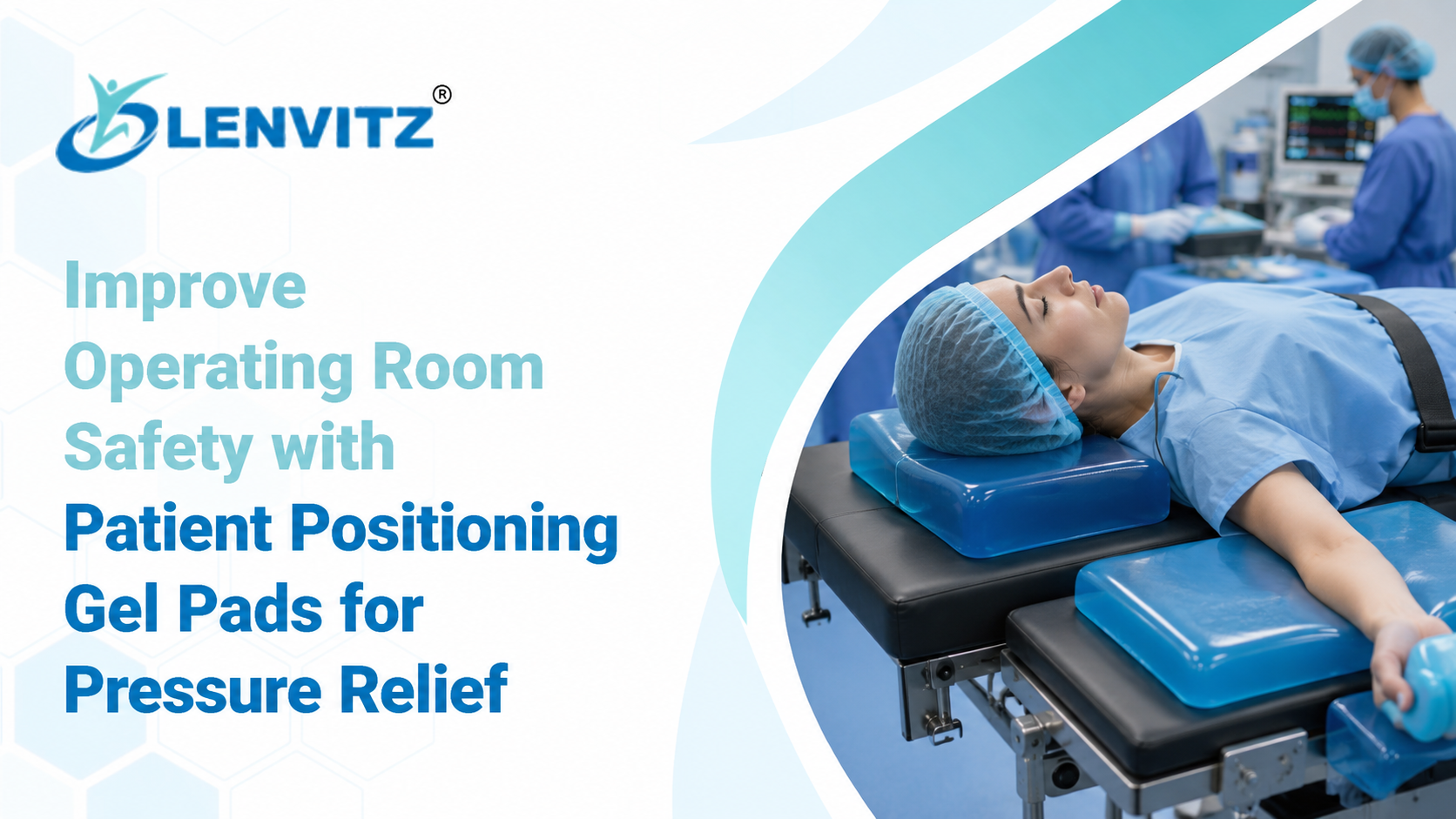
- The full-body OT table positioning gel pads surface distributes weight uniformly across the posterior torso, reducing sacral peak pressure below the ischaemic threshold
- Modular patient positioning gel pads for the head section, torso section, and leg section allow targeted protection at each anatomical risk zone
- The role of supine gel pads in orthopaedic, neurology, and cardiac surgeries is documented across specialties where patient immobility duration is longest
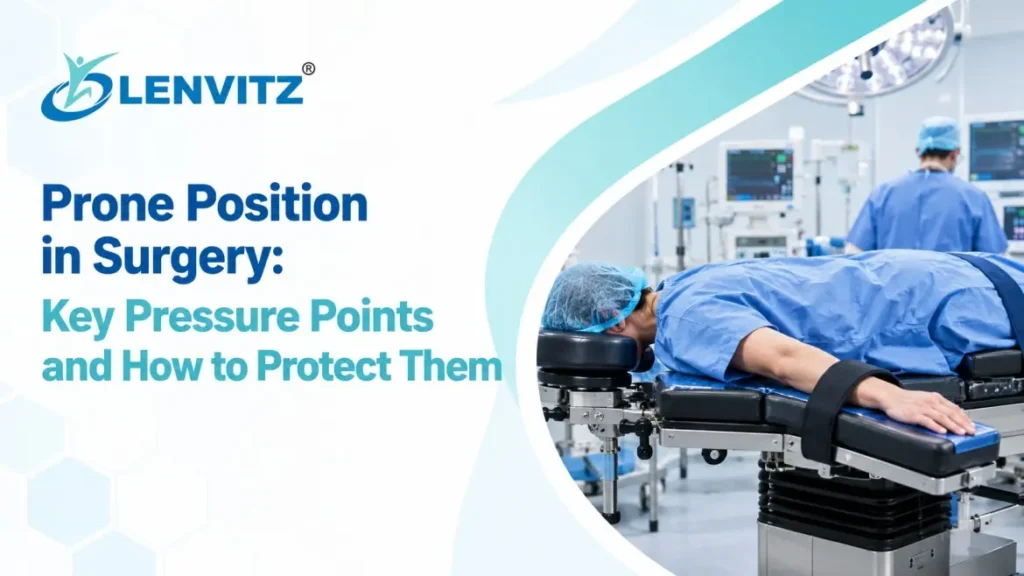
2. Prone Position – Maximum Pressure at Multiple Points Simultaneously
The prone position is the highest-complexity positioning challenge in surgical practice. The patient’s entire anterior surface is now in contact with the table, creating simultaneous pressure risks at the face, chest, breasts (in female patients), anterior iliac spines, knees, and dorsal feet. Simultaneously, the abdominal contents must be free to decompress, or inferior vena cava compression will impair venous return throughout the procedure.
What a correctly configured prone positioning system does:
- Prone chest rolls or gel frames support the thorax bilaterally, creating a free-hanging abdominal zone that decompresses the IVC and reduces intraoperative blood loss
- Head section silicon gel pads — horseshoe or prone head rest configurations protect the face, orbits, forehead, and chin from contact pressure while maintaining airway access
- Knee and shin gel pads protect the patellar and tibial periosteum from direct table contact
- Dorsal foot gel pads prevent plantar hyperflexion and dorsal skin pressure simultaneously
The role of gel positioners in ensuring comfort and safety during the prone position covers the full system approach to prone positioning across spine and neurosurgical applications.
3. Lithotomy Position – The Highest Nerve Injury Risk
The lithotomy position legs elevated and abducted in stirrups is standard for gynaecological, urological, colorectal, and perineal procedures. It is also the surgical position most consistently associated with serious nerve injuries, particularly common peroneal nerve compression at the fibular head and femoral nerve traction from sustained hip flexion.
The specific risks that OT table positioning gel pads address in lithotomy:
- Fibular head peroneal nerve compression – The lateral aspect of the knee contacts the stirrup support; without a gel pad between the leg and the stirrup, the common peroneal nerve is exposed to direct compressive force for the full procedure duration
- Calf compartment pressure – Legs in stirrups pool venous blood in the calf; adding calf silicon gel pads between the leg and the stirrup support maintains lower leg perfusion
- Sacral and coccygeal pressure – The pelvis shifts posteriorly in lithotomy, concentrating load on the sacrum and coccyx; a sacral patient positioning gel pad is essential for procedures over 90 minutes
The detailed clinical evidence for gel pads as surgical positioning devices in the lithotomy position demonstrates why silicon gel pads specifically, rather than foam stirrup covers, are the appropriate standard for these cases.
4. Lateral Position – Asymmetric Loading Across the Body
The lateral decubitus position creates a uniquely asymmetric pressure distribution, the dependent side bears the full body weight at a narrow band of bony prominences while the non-dependent side is under traction. The brachial plexus, ulnar nerve, common peroneal nerve at the fibular head, and the axillary neurovascular bundle are all at risk simultaneously.
Patient positioning gel pads for lateral cases must address both the compressive risks on the dependent side and the traction risks on the non-dependent side. A correctly configured silicon gel pads-based lateral positioner provides axillary support, dependent-leg protection at the fibular head, and full-body positional stability that prevents the progressive drift that accumulates nerve traction injury over long procedures.
The top benefits of lateral position gel pads for comfort and pressure injury prevention covers the specific product configurations for thoracic, urological, and orthopaedic lateral cases.
The OT Table Surface: Why the Gel Mat Matters as Much as the Positioning Devices
Operating room safety with patient positioning gel pads does not start with specialised head rings or lithotomy leg supports. It starts with the surface the patient lies on for the entire procedure, the OT table mat. A standard OT table has a firm, low-friction surface designed for surgical access and equipment attachment, not for pressure distribution or patient skin protection.
What a silicon gel OT table mat provides:
- Full-body baseline pressure redistribution from the moment the patient is positioned, before any specialised gel pads are applied at individual anatomical sites
- Shear force reduction at the skin-table interface, particularly critical for patients on tilted or Trendelenburg tables
- Temperature regulation — medical-grade silicone does not conduct heat away from the patient’s skin the way bare metal table surfaces do, reducing the peripheral vasoconstriction that worsens tissue perfusion under pressure
- A compatible surface base for the modular patient positioning gel pads used at the head, lateral, prone, and lithotomy positions, ensuring the entire positioning system works as an integrated unit
The importance of an OT table mat for patient comfort and stability and why a heavy-duty OT table mat matters for bariatric surgery support cover the product specifications relevant to standard and high-weight-capacity applications.
Patient Positioning Gel Pads Across Surgical Specialties: Quick Reference
| Surgical Position | Recommended Gel Pad Configuration | Primary Risk Prevented |
|---|---|---|
| Supine | OT Table Gel Mat + heel gel pads + head ring | Sacral, heel, occipital pressure injury |
| Prone | Prone chest frame + head rest silicon gel pads + knee pads | Orbital, sternal, iliac crest pressure; IVC compression |
| Lithotomy | Stirrup patient positioning gel pads + sacral pad | Peroneal nerve, calf compartment, sacral injury |
| Lateral | Lateral silicon gel pads positioner + between-knee pad | Brachial plexus, peroneal nerve, axillary compression |
| Trendelenburg | Full OT table gel pads mat + shoulder supports | Shear injury, shoulder pressure, brachial plexus stretch |
| Reverse Trendelenburg | Full OT table mat + foot board gel pads | Foot pressure, plantar flexion injury |
A Pre-Positioning Checklist for OT Teams
Before the patient is moved onto the table, confirm:
- The OT table positioning gel pads mat is correctly fitted to the table sections being used and free of visible tears or deformation
- All specialised patient positioning gel pads for the planned surgical position have been laid out, checked, and are at room temperature
- The specific bony prominence sites at risk for this patient’s position, body habitus, and procedure duration have been identified and the corresponding silicon gel pads are in place before the patient arrives in theatre
- Arm boards are padded with gel pads and positioned to maintain the arm at or below the level of the heart with the elbow in less than 90 degrees of flexion
- For procedures expected to exceed 2 hours, a position re-check is built into the team’s intraoperative protocol
- All patient positioning gel pads have been cleaned and inspected since the last use deformed or damaged gel pads are removed from service
The comprehensive approach to pressure injury prevention in the OR from head to heel provides the full evidence base for this checklist approach.
The Indian OT Context
India’s operating rooms span an enormous range of environments from NABH-accredited quaternary hospitals with fully equipped theatres to district and community hospitals where positioning equipment is limited to whatever foam padding and blankets the theatre has accumulated over years of use. In both settings, positioning-related injuries are underreported and underattributed. A pressure injury noted in the post-operative ward is rarely traced back to the OT table. A peroneal nerve palsy after a gynaecological procedure is rarely documented as a positioning complication.
This attribution gap means that the clinical case for upgrading to medical-grade patient positioning gel pads is often made on anecdote rather than data at the facility level. The national evidence is clear, intraoperative pressure injuries increase length of stay, increase infection risk, and generate avoidable litigation exposure. The investment in certified silicon gel pads-based positioning systems pays for itself in reduced post-operative complication management, faster patient throughput, and alignment with NABH standards for patient safety and positioning protocols.
Indian OT managers and clinical leads should also be aware that exploring the different types of patient positioning gel pads for various surgical positions is the starting point for building a positioning inventory that covers the full range of procedures a theatre performs not simply purchasing one generic mat and considering the obligation fulfilled.
FAQ’s
Medical-grade patient positioning gel pads prevent pressure injuries by keeping interface pressure below the tissue ischaemia threshold, not merely by making the surface softer. Studies consistently show that silicon gel pads reduce peak interface pressure at bony prominences to levels below the capillary closure threshold that triggers ischaemic injury. This is a measurable clinical outcome, not a comfort preference.
For procedures under 90 minutes on a correctly configured patient positioning gel pads surface, intraoperative pressure injury risk is low for most patients. Risk increases significantly after 2 hours, with high-risk patients (elderly, malnourished, diabetic, vascular disease) showing injury potential earlier. Silicon gel pads extend the safe positioning window compared to foam, but intraoperative position checks remain important for procedures over 3 hours.
Some silicon gel pads — flat pads, universal pillows, and gel mat sections are position-agnostic and can be used across supine, lateral, and prone configurations. Specialised patient positioning gel pads such as prone head rests, lithotomy stirrup covers, and axillary rolls are position-specific. A well-equipped theatre should carry both universal and position-specific gel pads to cover the full range of procedures it performs.
Medical-grade silicon gel pads can be wiped down with IPA (isopropyl alcohol) at 70% concentration, quaternary ammonium compounds, or other standard surface disinfectants used in OT environments. The cover, where present, should be removed and laundered or replaced. Silicon gel pads should be inspected for tears, punctures, or material deformation after cleaning damaged gel pads should be removed from service immediately.
The OT table positioning gel pads mat provides full-body baseline pressure redistribution across the entire posterior surface. Individual patient positioning gel pads head rings, heel pads, arm rests, lithotomy leg supports provide targeted protection at specific high-risk anatomical sites. Both are required for comprehensive intraoperative pressure safety; the mat alone does not replace position-specific padding, and position-specific padding alone does not replace the baseline protection the mat provides.